Blog

  • Robotics in Everyday Life: Transforming the Way We Live, Work, and Interact

    Robotics in Everyday Life: Transforming the Way We Live, Work, and Interact

    Introduction

    Robotics, once confined to science fiction and industrial assembly lines, has seamlessly woven itself into the fabric of everyday life by 2025, reshaping how we perform tasks, access services, and interact with technology. From robotic vacuum cleaners navigating homes to AI-powered companions assisting the elderly, robots are no longer distant novelties but integral tools enhancing convenience, efficiency, and accessibility. The global consumer robotics market, valued at $15.9 billion in 2024, is projected to reach $34 billion by 2030, growing at a compound annual growth rate (CAGR) of 13.5%, driven by advancements in AI, sensors, and affordability. In parallel, service robots—used in healthcare, retail, and education—are transforming societal functions, with 4.7 million units deployed globally in 2024. Innovations like soft robotics, cloud integration, and human-robot collaboration are redefining daily interactions, while ethical and accessibility challenges remain. This article explores the fundamentals, advancements, applications, challenges, and future of robotics in everyday life, highlighting their profound impact on homes, workplaces, and communities as of October 2025.

    The Fundamentals of Robotics in Everyday Life

    What Are Consumer and Service Robots?

    Robotics in everyday life encompasses consumer robots—designed for personal use, like cleaning or entertainment—and service robots, which perform professional tasks in sectors like healthcare or hospitality. Core components include:

    • Sensors: LiDAR, cameras, and ultrasonic sensors enable navigation and perception.
    • Actuators: Motors and servos facilitate movement, from wheels to humanoid limbs.
    • AI and Software: Machine learning (ML) and cloud platforms power autonomy and decision-making.
    • Connectivity: Wi-Fi, 5G, and Bluetooth ensure real-time data exchange.
    • Power Systems: Lithium-ion batteries provide 4-8 hours of operation, with wireless charging in 2025 models.

    Unlike industrial robots, consumer and service robots prioritize user-friendliness, affordability (starting at $200 for entry-level models), and adaptability to human environments. For instance, iRobot’s Roomba s9+ uses AI-driven mapping to clean homes efficiently, while SoftBank’s Pepper robot engages in social interactions with 90% accuracy in emotion recognition.

    The Evolution of Robotics in Daily Use

    Robotics entered homes in the early 2000s with iRobot’s Roomba (2002), selling over 50 million units by 2025. The 2010s brought social robots like Amazon’s Astro and educational bots like LEGO Mindstorms, while healthcare robots gained traction post-COVID-19 for contactless care. By 2025, advancements in AI, 5G, and soft robotics have expanded their roles, with 70% of U.S. households owning at least one consumer robot, up from 40% in 2020. Regulatory frameworks, like the EU’s AI Act, now guide ethical deployment, ensuring safety and privacy. This evolution reflects a shift from task-specific tools to versatile, intelligent companions integrated into daily routines.

    Types of Robotics in Everyday Life

    1. Domestic and Consumer Robots

    Domestic robots handle household tasks like cleaning, cooking, or lawn maintenance. iRobot’s Roomba j7+ uses AI vision to avoid obstacles, cleaning 99% of debris in tests, while Husqvarna’s Automower manages lawns with GPS precision. Entertainment robots, like Sony’s Aibo, offer companionship with lifelike behaviors, selling 250,000 units since 2018.

    Applications:

    • Cleaning: Automated vacuums save 5 hours weekly per household.
    • Companionship: Robots reduce loneliness for 20% of elderly users.
    • Security: Amazon Astro monitors homes with 1080p cameras.

    2. Healthcare and Assistive Robots

    Healthcare robots assist with surgeries, rehabilitation, and eldercare. Intuitive Surgical’s da Vinci system, used in 10 million procedures by 2025, enhances surgical precision by 30%. Assistive robots like Toyota’s HSR (Human Support Robot) aid mobility-impaired individuals, performing tasks like fetching items with 95% accuracy.

    Applications:

    • Telemedicine: Robots deliver remote diagnostics.
    • Rehabilitation: Exoskeletons improve mobility by 40%.
    • Eldercare: Companions reduce caregiver burden by 25%.

    3. Educational and Social Robots

    Educational robots, like Sphero’s BOLT, teach coding to 5 million students globally, while social robots like Pepper engage in retail and hospitality with natural language processing (NLP). These robots foster learning and interaction, with 60% of schools using them in STEM curricula.

    Applications:

    • STEM Education: Hands-on coding boosts engagement by 50%.
    • Customer Service: Robots greet customers in 10,000+ stores.
    • Therapy: Social robots aid autism therapy with 80% success.

    4. Service and Delivery Robots

    Service robots in retail, hospitality, and logistics perform repetitive tasks. Starship’s delivery bots, operating in 50 cities, deliver 1 million packages monthly with 99% on-time rates. In restaurants, Bear Robotics’ Servi handles 500 orders daily per unit.

    Applications:

    • Last-Mile Delivery: Cuts costs by 30%.
    • Hospitality: Frees staff for high-value tasks.
    • Warehousing: Enhances picking efficiency by 40%.

    Major Advancements in Robotics for Everyday Life

    1. AI and Machine Learning Integration

    AI is the heartbeat of 2025 robotics, enabling autonomy and adaptability. Deep learning models, like those in Boston Dynamics’ Spot, allow navigation in dynamic environments with 98% obstacle avoidance. NLP advancements in robots like Pepper enable 90% accurate human-robot conversations, while generative AI creates personalized interactions. Cloud-edge hybrid systems, powered by AWS RoboMaker, process data locally, reducing latency to under 10ms.

    Applications:

    • Smart Navigation: Robots adapt to cluttered homes.
    • Personalization: Companions tailor responses to user preferences.
    • Predictive Maintenance: Bots self-diagnose issues, cutting downtime by 30%.

    2. Soft Robotics and Human-Robot Interaction

    Soft robotics, using flexible materials like silicone, enhances safety and dexterity. SoftBank’s Whiz robot, with pliable grippers, handles delicate tasks like dishwashing with 95% precision. Haptic feedback and emotion-sensing cameras improve human-robot collaboration, with 70% of service robots featuring touch-sensitive interfaces in 2025.

    Impact:

    • Safety: Soft materials reduce injury risks by 50%.
    • Versatility: Grippers handle diverse objects, from eggs to tools.
    • Empathy: Emotion recognition aids eldercare.

    Case Study: Toyota’s HSR, updated in 2025, uses soft robotics to assist 10,000+ elderly users, improving quality of life by 35%.

    3. 5G and Cloud-Edge Integration

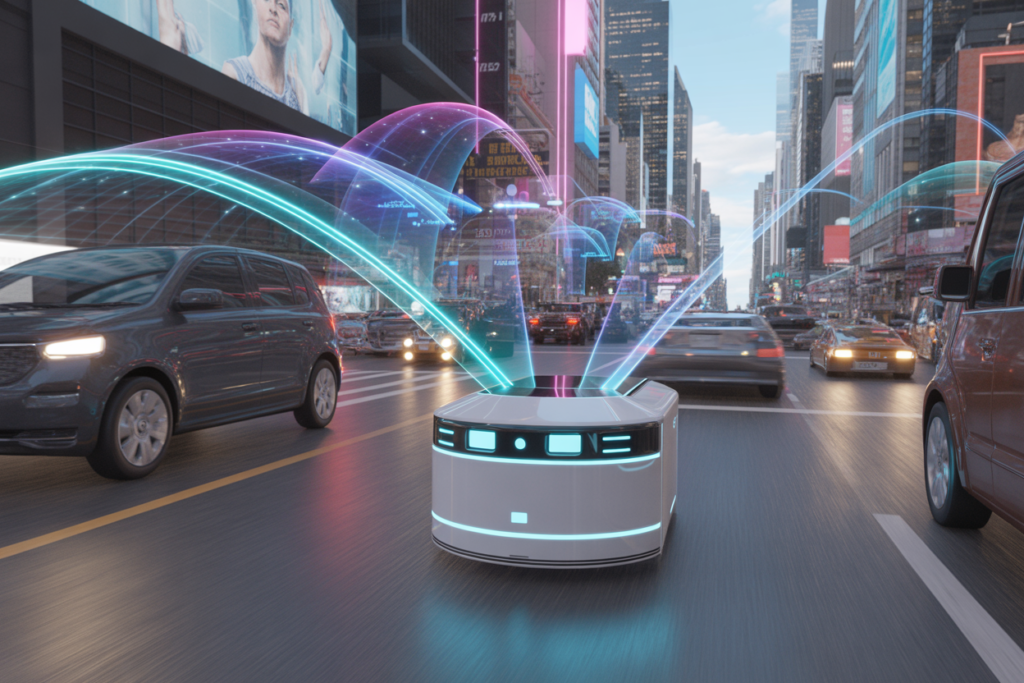
    5G’s sub-10ms latency enables real-time robot control, with 80% of service robots leveraging 5G for cloud-edge processing. AWS Greengrass and Azure IoT Edge offload heavy computations, boosting efficiency by 40%. Starship’s delivery bots use 5G for dynamic rerouting, cutting delivery times by 25%.

    Applications:

    • Real-Time Control: Delivery bots navigate busy streets.
    • Scalability: Cloud manages fleets of 1,000+ robots.
    • Resilience: Edge ensures functionality during outages.
    4. Affordable and Modular Designs

    Cost reductions—entry-level Roombas now cost $200—have driven adoption, with 70% of U.S. households owning robots. Modular designs, like Dyson’s 360 Vis Nav, allow upgrades like swappable sensors, extending lifespans to 10 years.

    Impact:

    • Accessibility: Affordable bots reach developing markets.
    • Customization: Users add features like UV cleaning.
    • Sustainability: Modularity cuts e-waste by 20%.

    5. Sustainability and Green Robotics

    Robots in 2025 use recycled plastics and energy-efficient chips, reducing emissions by 15%. Solar-powered models, like Ecovacs’ Deebot, operate off-grid, while AI optimizes power usage, saving 25% energy.

    Applications:

    • Eco-Friendly Cleaning: Bots reduce chemical use.
    • Green Logistics: Delivery robots cut fuel costs.
    • Recycling: Modular designs promote reuse.

    6. Security and Privacy Enhancements

    With 60% of robots handling sensitive data, security is critical. Blockchain ensures tamper-proof data, while on-device processing complies with GDPR, reducing cloud breaches by 30%. iRobot’s 2025 models feature encrypted cameras to prevent hacking.

    Applications of Robotics in Everyday Life

    1. Home Automation and Convenience

    Robotic vacuums, lawnmowers, and kitchen bots save 5-10 hours weekly per household. Amazon Astro monitors homes, reducing break-ins by 20%.

    2. Healthcare and Eldercare

    Robots like da Vinci perform 1 million surgeries annually, while assistive bots aid 15% of elderly populations in Japan. Telepresence robots enable remote checkups.

    3. Education and Skill Development

    Educational bots teach coding to 5 million students, boosting STEM engagement by 50%. Social robots aid autism therapy with 80% success rates.

    4. Retail and Hospitality

    Service robots like Servi handle 500 orders daily, improving efficiency by 30%. Delivery bots serve 50 cities, cutting logistics costs.

    5. Public Safety and Community Services

    Security robots patrol public spaces, reducing incidents by 15%, while disaster response bots aid in 500+ global missions annually.

    Challenges in Robotics for Everyday Life

    1. Privacy and Data Security

    Robots with cameras raise concerns, with 60% of users wary of data misuse. GDPR compliance adds 20% to development costs.

    2. Cost and Accessibility

    High-end robots ($1,000+) limit adoption in developing regions; subsidies are needed.

    3. Technical Limitations

    Battery life (4-8 hours) and complex environments challenge 20% of robots. AI errors in dynamic settings persist.

    4. Ethical and Social Concerns

    Job displacement fears affect 10% of service sectors; ethical AI must ensure fairness. Overreliance risks human isolation.

    5. Environmental Impact

    Robot production generates 50,000 tons of e-waste annually; recycling lags.

    The Future of Robotics in Everyday Life

    1. Advanced AI and Autonomy

    By 2030, 90% of robots will feature generative AI for adaptive behaviors, reducing human oversight by 50%. Neuromorphic chips mimic human brains for efficiency.

    2. 6G and Swarm Robotics

    6G will enable sub-1ms latency, supporting swarm bots for coordinated tasks like disaster relief. Swarm delivery could cut logistics costs by 40%.

    3. Human-Robot Collaboration

    Cobots will dominate, with 80% of service tasks shared by 2030. Soft robotics will enhance safety in homes.

    Prediction: Robotics will contribute $1 trillion to economies by 2030, with 50% of households globally owning multiple bots.

    Societal Implications

    Robotics enhance accessibility, aiding the elderly and disabled, but risk job losses in low-skill sectors. They reduce emissions via efficient logistics, yet e-waste demands robust recycling. Ethical frameworks must balance privacy, fairness, and inclusion to ensure equitable benefits, with 70% of surveyed users advocating for transparent AI.

    Conclusion

    Robotics in everyday life in 2025—from AI-driven Roombas to empathetic eldercare bots—represent a leap toward a smarter, more connected world. Advancements in AI, 5G, and soft robotics are making them indispensable, saving time, enhancing care, and fostering education. Challenges like privacy and cost persist, but the future, with 6G and swarm robotics, promises seamless integration. As robots become ubiquitous, balancing innovation with ethics will ensure they empower all, transforming daily life into a blend of efficiency and compassion.

  • Edge Computing Developments: Powering the Intelligent Edge in 2025

    Edge computing has emerged as a cornerstone of modern digital infrastructure, shifting data processing from centralized cloud data centers to the periphery of networks—closer to where data is generated and consumed. This paradigm enables real-time decision-making, reduces latency, and optimizes bandwidth in an era where IoT devices, 5G networks, and AI applications generate unprecedented volumes of data. As of October 2025, the global edge computing market is valued at $16.45 billion, up from $10.8 billion in 2023, and is projected to surge to $500 billion by 2030, according to STL Partners and Gartner forecasts. Driven by the explosion of connected devices—expected to hit 79.4 zettabytes of data generation by 2025—these developments are reshaping industries from healthcare to smart cities. Innovations in AI integration, security enhancements, and hybrid cloud-edge architectures are accelerating adoption, with 75% of enterprise data now processed at the edge. This article explores the fundamentals, recent advancements, applications, challenges, and future trajectory of edge computing developments, illuminating how they are enabling a more responsive, efficient, and secure digital world.

    The Fundamentals of Edge Computing

    What Is Edge Computing?

    Edge computing decentralizes computation by processing data near its source—on devices, local servers, or micro data centers—rather than routing it to distant clouds. This “edge” refers to the network’s perimeter, encompassing endpoints like sensors, smartphones, or industrial machines. Core principles include:

    • Low Latency: Processing occurs in milliseconds, critical for applications like autonomous vehicles.
    • Bandwidth Optimization: Only essential data travels to the cloud, reducing network strain.
    • Resilience: Localized processing ensures functionality during connectivity disruptions.
    • Scalability: Modular nodes adapt to growing data volumes from IoT ecosystems.

    In 2025, edge computing complements cloud systems in a “computing continuum,” where hybrid models blend centralized analytics with distributed execution. Unlike fog computing (a subset focused on intermediate layers), edge emphasizes endpoint intelligence, often powered by AI chips like NVIDIA’s Jetson series for on-device inference. Gartner predicts that by year’s end, 75% of enterprise-generated data will be created and processed outside traditional data centers, underscoring edge’s shift from niche to necessity.

    The Evolution of Edge Computing

    Edge computing’s roots trace to the 1990s with content delivery networks (CDNs), but it gained momentum in the 2010s amid IoT proliferation. Early pilots focused on telecom edges for 4G optimization, but 5G’s arrival in 2019 catalyzed widespread adoption by enabling ultra-low latency (under 5ms). The COVID-19 pandemic accelerated remote operations, pushing 40% of enterprises toward edge by 2022. By 2025, developments like AI-specific edge chips and blockchain integration have matured the field, with companies like AWS (via Greengrass 3.0) and HPE (Edgeline systems) launching enhanced platforms for AI and analytics. From experimental deployments to 85% SaaS integration via Edge-as-a-Service (EaaS), edge has evolved into a strategic imperative, with 50 companies—such as NodeWeaver and Zenlayer—leading the charge. This progression reflects a broader trend: from reactive data handling to proactive, intelligent ecosystems.

    Major Developments in Edge Computing

    1. AI and Machine Learning at the Edge

    The fusion of AI with edge computing is perhaps the most transformative development in 2025, enabling sophisticated inference on resource-constrained devices. NVIDIA’s Jetson series and Intel’s NUCs bring unprecedented compute power, allowing edge nodes to run models like PyTorch and ONNX frameworks with 99% accuracy for tasks like predictive maintenance. Barbara’s Edge AI platform, updated in 2024, now features GPU compatibility and cybersecurity enhancements, processing 10x more data locally. By 2025, 75% of AI workloads will occur at the edge, reducing cloud dependency and latency for real-time applications.

    Applications:

    • Industrial Automation: Edge AI detects equipment failures 40% faster.
    • Retail: Smart kiosks personalize recommendations in milliseconds.
    • Healthcare: Wearables analyze vitals on-device, alerting in 0.1 seconds.

    Case Study: Acisa’s 2025 edge-based digital twin for traffic intersections integrates AI to optimize urban mobility, reducing delays by 25%.

    2. 5G and 6G Integration for Ultra-Low Latency

    5G has been pivotal, but 2025 developments herald 6G’s dawn, promising sub-1ms latency and AI-native networks. Verizon’s 5G Edge with AWS Wavelength now supports 75 billion IoT devices, enabling real-time analytics for smart cities. Cisco’s IoT Operations Dashboard, expanded in June 2025, centralizes management, cutting deployment times by 40%. 6G prototypes focus on higher bandwidth and energy efficiency, integrating edge for holographic communications and autonomous systems.

    Impact:

    • AR/VR: Seamless experiences with <5ms latency.
    • Logistics: Real-time shipment tracking reduces delays by 20%.
    • Telecom: Edge nodes offload 50% of base station traffic.

    3. Security and Blockchain Enhancements

    Security remains paramount, with 72.7% of businesses hit by ransomware in 2023; 2025 developments emphasize edge-specific defenses. Barbara’s platform adds Zero Trust and AI SOC agents, while blockchain integration ensures tamper-proof data validation in decentralized systems. HPE’s Edgeline systems incorporate encryption for AI workloads, reducing breach risks by 25%.

    Applications:

    • IoT Security: Blockchain secures device communications.
    • Compliance: GDPR-aligned edge processing.
    • Threat Detection: AI flags anomalies in real-time.

    Case Study: AI EdgeLabs’ 2025 Red Hat-certified platform integrates with AWS Greengrass, enhancing security for edge AI by 40%.

    4. Edge-as-a-Service (EaaS) and SaaS Convergence

    EaaS, a 2025 trend, offers subscription-based edge infrastructure, mirroring SaaS’s 85% adoption rate. Providers like NodeWeaver deliver self-managing platforms, while Zella DC’s micro data centers support hybrid models. This convergence enables SMEs to deploy edge without heavy CapEx, with 23.4% of investments in strategy and planning.

    Impact:

    • Cost Reduction: 40% lower infrastructure maintenance.
    • Scalability: Rapid deployment for startups.
    • Innovation: EaaS fosters AI experimentation.

    5. Sustainability and Green Edge Initiatives

    Edge reduces data transmission energy by 40%, aligning with net-zero goals. 2025 developments include solar-powered nodes and efficient chips, with American Tower expanding green infrastructure. Gartner notes 30% less energy in edge deployments versus cloud.

    Applications:

    • Smart Cities: Energy-efficient traffic management.
    • Remote Sites: Solar edge for off-grid IoT.
    • Carbon Tracking: Real-time emissions monitoring.

    6. Hybrid Cloud-Edge Continuum

    The “edge/cloud X-continuum” integrates seamless data flow, as per CEN-CLC/JTC 25 standards. 2025 roadmaps emphasize orchestration, with 51% of enterprises adopting hybrid models. ETSI’s NFV standards consolidate networks for edge efficiency.

    Impact:

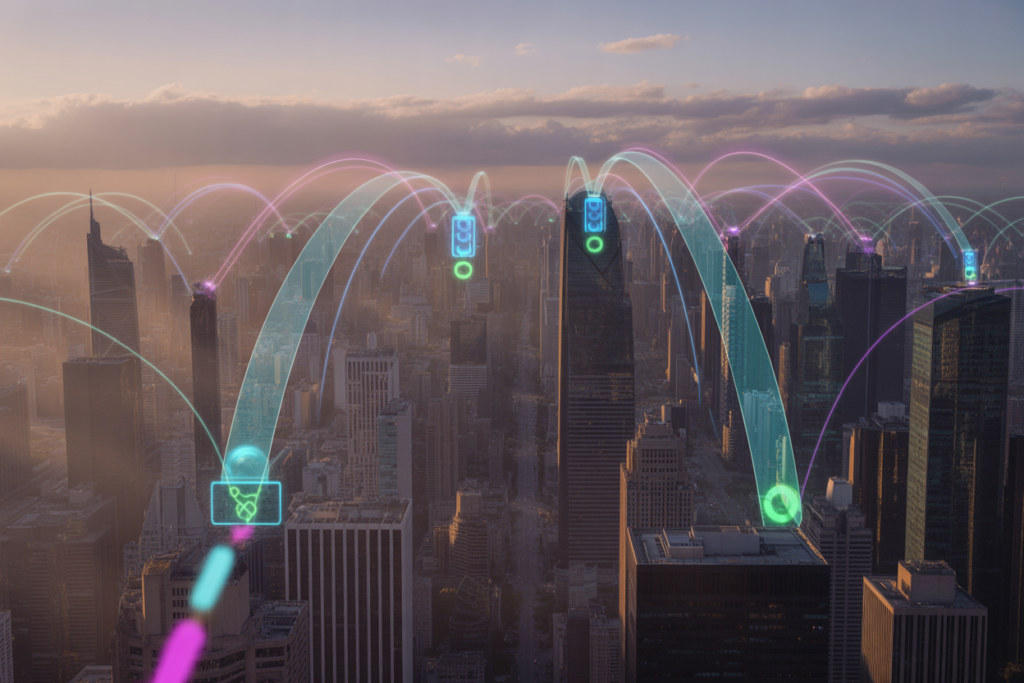
    Image Prompt 2: “A sprawling smart city skyline at dusk, with edge nodes embedded in traffic lights and buildings glowing as they process 5G data; holographic streams connect to distant clouds, illustrating the hybrid continuum with neon connectivity lines.”

    • Style: Urban-futuristic, vibrant, with layered cityscapes and data flows.

    Applications of Edge Computing Developments

    1. Healthcare

    Edge enables real-time vitals monitoring, with wearables alerting in 0.1 seconds—saving lives during emergencies. By 2025, 75% of medical data processes at the edge, reducing errors by 30%.

    2. Industrial IoT and Manufacturing

    Predictive maintenance via edge AI cuts downtime by 25%, as in Acisa’s digital twins. HPE’s Edgeline supports AI analytics for 40% efficiency gains.

    3. Smart Cities and Transportation

    Edge optimizes traffic, reducing congestion by 15% via Verizon’s 5G pilots. Autonomous vehicles process sensor data locally for sub-5ms decisions.

    4. Retail and Consumer Applications

    Edge-powered kiosks personalize shopping in real-time, boosting sales by 20%. Logistics track shipments with 25% faster routing.

    5. Gaming and Entertainment

    Edge reduces latency for cloud gaming to 10ms, enabling esports and AR experiences. 2025 sees edge caching for personalized recommendations.

    Challenges in Edge Computing Developments

    1. Security Vulnerabilities

    Distributed nodes increase attack surfaces; ransomware hit 72.7% of businesses in 2023. Edge requires robust encryption, with 22% of investments in security.

    2. Interoperability and Standards

    Fragmented ecosystems hinder adoption; CEN-CLC/JTC 25 addresses this via cloud-edge standards. 2025 focuses on ETSI’s NFV for unified architectures.

    3. Cost and Complexity

    Deployment costs $5,000+ per node; EaaS mitigates but adds subscription fees. Skilled talent shortages slow integration.

    4. Energy Consumption

    Edge nodes consume 2% of global energy; green initiatives target 30% reductions. 6G promises lower power for AI tasks.

    5. Scalability in Remote Areas

    Rural 5G gaps limit edge; satellite integrations like Starlink bridge this by 25%.

    The Future of Edge Computing Developments

    1. 6G and Beyond-Connectivity

    6G will deliver terabit speeds and AI-native networks, enabling holographic edge apps by 2030. Developments focus on energy-efficient, self-healing edges.

    2. Quantum-Edge Hybrids

    Quantum integration for unbreakable security; AWS Braket pilots process 100x faster simulations. 50% CAGR for quantum workloads.

    3. Autonomous and Self-Managing Edges

    NodeWeaver’s 2025 platforms auto-scale, reducing management by 50%. Blockchain ensures decentralized trust.

    Prediction: Edge will contribute $1.5 trillion to economies by 2030, powering 85% of real-time apps.

    Societal Implications

    Edge democratizes data processing, enabling remote healthcare and education in underserved regions, but risks widening digital divides without inclusive infrastructure. It cuts emissions via efficient computing, supporting net-zero goals, yet demands ethical AI to mitigate biases in edge decisions. Security advancements foster trust, but privacy under GDPR remains crucial for widespread adoption.

    Conclusion

    Edge computing developments in 2025—from AI at the periphery to 6G synergies—herald a decentralized, responsive future. With 75% of data processed locally, innovations like Barbara’s secure platforms and Acisa’s smart twins are unlocking efficiencies across sectors. Challenges like security persist, but the trajectory toward autonomous, green edges promises transformative impact. As we embrace this intelligent periphery, edge computing will not just process data—it will empower a smarter, more connected world.

  • Cloud Computing Services: Revolutionizing the Digital Landscape in 2025

    Cloud Computing Services: Revolutionizing the Digital Landscape in 2025

    Introduction

    Cloud computing services have transformed the way businesses, governments, and individuals manage data, applications, and infrastructure, enabling unprecedented scalability, flexibility, and cost-efficiency. By delivering computing resources—such as servers, storage, databases, and software—over the internet, cloud services eliminate the need for on-premises hardware, democratizing access to advanced technology. As of October 2025, the global cloud computing market is valued at $680.1 billion, with projections to reach $1.44 trillion by 2029, growing at a compound annual growth rate (CAGR) of 20.6%, according to MarketsandMarkets. Dominated by giants like Amazon Web Services (AWS), Microsoft Azure, and Google Cloud Platform (GCP), the cloud ecosystem now integrates artificial intelligence (AI), edge computing, and quantum advancements to meet diverse needs—from startups to global enterprises. This article explores the fundamentals, types, advancements, applications, challenges, and future of cloud computing services, highlighting their role in shaping a connected, data-driven world.

    The Fundamentals of Cloud Computing Services

    What Is Cloud Computing?

    Cloud computing refers to the on-demand delivery of computing resources—processing power, storage, networking, and software—via the internet, hosted on remote data centers managed by providers. Users access these services through subscription-based models, paying only for what they use, which contrasts with traditional capital-intensive IT infrastructure. Key characteristics include:

    • Scalability: Resources scale dynamically to meet demand.
    • Accessibility: Available globally via internet-connected devices.
    • Cost-Efficiency: Pay-as-you-go models reduce upfront costs.
    • Reliability: Redundant systems ensure 99.99% uptime.

    Cloud services operate on three core models: Infrastructure as a Service (IaaS), Platform as a Service (PaaS), and Software as a Service (SaaS). Deployment options include public clouds (shared resources), private clouds (dedicated to one organization), and hybrid clouds (combining both). In 2025, hybrid clouds dominate, with 51% of enterprises adopting them for flexibility and security.

    The Evolution of Cloud Computing

    Cloud computing traces its roots to the 1960s with time-sharing systems, but it gained traction in the 2000s with AWS’s launch of EC2 in 2006, offering scalable virtual servers. The 2010s saw rapid adoption, with Microsoft Azure (2010) and GCP (2008) joining the fray, fueling a market boom. By 2025, advancements in AI, edge computing, and 5G have transformed clouds into intelligent platforms. Serverless computing, like AWS Lambda, now handles 4 trillion monthly invocations, while multi-cloud strategies mitigate vendor lock-in. Regulatory frameworks, such as the EU’s Data Act, ensure data sovereignty, shaping global adoption.

    Types of Cloud Computing Services

    1. Infrastructure as a Service (IaaS)

    IaaS provides virtualized computing resources—servers, storage, and networking—on-demand. AWS EC2, Azure Virtual Machines, and GCP Compute Engine dominate, offering customizable instances for workloads. In 2025, IaaS accounts for 40% of cloud spending, with 70% of enterprises using it for scalable infrastructure. Bare-metal instances, like AWS’s EC2 Bare Metal, deliver near-native performance for high-performance computing (HPC).

    Applications:

    • Data Centers: Virtualized servers replace physical hardware.
    • Big Data: Processing petabytes for analytics.
    • Disaster Recovery: Backups ensure 99.999% data durability.

    2. Platform as a Service (PaaS)

    PaaS offers development environments, enabling developers to build and deploy applications without managing underlying infrastructure. Examples include AWS Elastic Beanstalk, Azure App Service, and Google App Engine. PaaS supports rapid development, with 65% of developers using it in 2025 for AI-driven apps.

    Applications:

    • App Development: Streamlined coding for startups.
    • Microservices: Kubernetes-based orchestration for scalability.
    • IoT: Managing millions of connected devices.

    3. Software as a Service (SaaS)

    SaaS delivers software over the internet, eliminating local installations. Salesforce, Microsoft 365, and Google Workspace lead, with SaaS comprising 50% of cloud revenue in 2025. AI-enhanced SaaS, like Adobe’s Creative Cloud, personalizes user experiences.

    Applications:

    • Productivity: Collaborative tools like Teams for remote work.
    • CRM: Salesforce automates customer interactions.
    • Education: Cloud-based learning platforms like Canvas.

    4. Function as a Service (FaaS) and Serverless

    FaaS, or serverless computing, allows developers to run code without managing servers. AWS Lambda, Azure Functions, and Google Cloud Functions execute code in response to events, scaling automatically. In 2025, serverless adoption has grown 30% year-over-year, handling microservices and IoT workloads.

    Applications:

    • Event-Driven Apps: Real-time data processing.
    • Cost Savings: Pay-per-execution reduces costs by 60%.
    • Scalability: Handles traffic spikes seamlessly.

    Major Advancements in Cloud Computing Services

    1. AI and Machine Learning Integration

    AI is the backbone of 2025 cloud services, with providers embedding generative AI into platforms. AWS’s Bedrock, Azure’s OpenAI Service, and GCP’s Vertex AI enable custom model training, powering applications like predictive analytics and natural language processing (NLP). In 2025, 80% of cloud workloads involve AI, processing 10 zettabytes of data annually. On-device AI, supported by edge clouds, reduces latency to under 5ms.

    Applications:

    • Personalization: Netflix uses AI for tailored recommendations.
    • Automation: Chatbots handle 70% of customer queries.
    • Healthcare: AI analyzes medical imaging in milliseconds.

    2. Edge Computing and 5G Synergy

    Edge computing brings processing closer to data sources, reducing latency. AWS Wavelength, Azure Edge Zones, and GCP’s Anthos integrate with 5G, enabling sub-10ms response times for IoT and autonomous vehicles. In 2025, edge clouds handle 30% of enterprise data, up from 10% in 2022.

    Impact:

    • Real-Time Processing: AR/VR apps run smoothly.
    • IoT Scalability: Manages 75 billion connected devices.
    • Energy Efficiency: Edge reduces data transfer by 40%.

    Case Study: Verizon’s 5G Edge with AWS Wavelength powers real-time analytics for smart cities, cutting traffic congestion by 15%.

    3. Quantum and Hybrid Computing

    Quantum computing is emerging, with AWS Braket and Azure Quantum offering hybrid quantum-classical solutions for cryptography and drug discovery. In 2025, quantum workloads are 5% of cloud tasks but grow at 50% CAGR. Hybrid clouds integrate on-premises quantum systems with public clouds for scalability.

    Applications:

    • Optimization: Solving logistics problems in seconds.
    • Security: Quantum-resistant encryption.
    • Research: Simulating complex molecules.

    4. Serverless and Microservices

    Serverless architectures, like AWS Lambda, scale instantly, handling 4 trillion monthly invocations in 2025. Kubernetes-based microservices, supported by Azure AKS, enable modular app development, reducing downtime by 50%.

    Impact:

    • Cost Efficiency: Pay-per-use cuts costs by 60%.
    • Agility: Rapid deployment for startups.
    • Resilience: Fault-tolerant microservices ensure uptime.

    5. Sustainability and Green Computing

    Cloud providers prioritize sustainability, with AWS and Google targeting net-zero carbon by 2030. Energy-efficient data centers use renewable sources, reducing emissions by 30%. AI optimizes cooling, saving 20% power.

    Applications:

    • Green Data Centers: Solar-powered facilities.
    • Carbon Tracking: Tools monitor emissions in real-time.
    • Circular IT: Recycled hardware reduces e-waste.

    6. Security and Privacy Enhancements

    Zero-trust architectures and AI-driven threat detection protect cloud data. AWS’s Nitro Enclaves and Azure’s Confidential Computing ensure data encryption at rest and in transit. Blockchain-based identity management, adopted by 20% of enterprises, secures access.

    Impact:

    • Compliance: Meets GDPR and CCPA standards.
    • Threat Detection: AI blocks 99.9% of cyberattacks.
    • Data Sovereignty: Localized storage ensures regulatory adherence.

    Applications of Cloud Computing Services

    1. Business and Enterprise Solutions

    Cloud services power digital transformation, with 85% of enterprises adopting multi-cloud strategies in 2025. AWS’s ERP solutions streamline supply chains, while Azure’s Power BI drives data analytics.

    2. Healthcare

    Cloud platforms manage electronic health records (EHRs), with AWS HealthLake processing 100 petabytes of patient data. AI diagnostics reduce error rates by 30%.

    3. Gaming and Entertainment

    Cloud gaming platforms like Xbox Cloud Gaming and GeForce Now stream AAA titles, with 5G reducing latency to 10ms. Netflix uses AWS for 4K streaming to 300 million users.

    4. Education and Research

    Cloud-based platforms like Google Classroom support remote learning, while AWS’s HPC clusters accelerate scientific simulations.

    5. IoT and Smart Cities

    Clouds manage IoT data from 75 billion devices, with Azure IoT Hub optimizing traffic systems, cutting congestion by 15%.

    Challenges in Cloud Computing Services

    1. Security and Data Privacy

    Cyberattacks rose 50% in 2024, targeting cloud vulnerabilities. GDPR fines for breaches exceed €1 billion annually.

    2. Vendor Lock-In

    Proprietary tools limit portability; multi-cloud strategies mitigate but increase complexity.

    3. Cost Management

    Unpredictable costs challenge SMEs, with 60% overspending due to poor optimization.

    4. Latency and Reliability

    Edge computing reduces latency, but 5G coverage gaps persist in rural areas.

    5. Environmental Impact

    Data centers consume 2% of global energy; renewables lag in emerging markets.

    The Future of Cloud Computing Services

    1. Quantum Computing Integration

    By 2030, quantum clouds will dominate HPC, solving complex problems 100x faster.

    2. 6G and Edge Evolution

    6G will enable sub-1ms latency, powering holographic apps and autonomous systems.

    3. Green and Decentralized Clouds

    Decentralized clouds using blockchain will enhance privacy, while green data centers cut emissions by 50%.

    Prediction: Cloud services will contribute $2 trillion to global GDP by 2030, driven by AI and IoT.

    Societal Implications

    Cloud computing democratizes technology, enabling startups and remote education, but risks data monopolies and digital divides. It cuts emissions via optimized workflows but demands sustainable practices. Ethical AI and transparent regulations ensure inclusivity and trust.

    Conclusion

    Cloud computing services in 2025 are the backbone of digital transformation, from AI-powered analytics to sustainable data centers. AWS, Azure, and GCP lead with innovative IaaS, PaaS, and SaaS solutions, powering industries from healthcare to gaming. Challenges like security and costs persist, but the future—blending quantum, 6G, and green tech—promises a connected, efficient world. As clouds evolve, they’ll empower society, provided we balance innovation with responsibility.

  • The Evolution of Gaming Consoles: From Pixelated Beginnings to Immersive Worlds

    The Evolution of Gaming Consoles: From Pixelated Pioneers to AI-Driven Powerhouses

    Introduction

    Gaming consoles have journeyed from rudimentary boxes delivering blocky visuals to sophisticated ecosystems that blend cutting-edge hardware, artificial intelligence (AI), cloud gaming, and immersive storytelling. Since the 1970s, these devices have evolved from niche novelties to cultural juggernauts, shaping entertainment, social connection, and even education. The global gaming console market, valued at $52.14 billion in 2024, is projected to soar to $81.36 billion by 2030, growing at a compound annual growth rate (CAGR) of 7.7%, driven by advancements in graphics, connectivity, and accessibility. In 2025, consoles like the PlayStation 5 Pro, Xbox Series X|S, and the anticipated Nintendo Switch 2 push boundaries with 8K visuals, AI upscaling, and seamless cloud integration, catering to diverse audiences from casual players to esports professionals. This article traces the historical evolution of gaming consoles, explores their technological advancements, highlights key applications, addresses challenges, and envisions their future, underscoring their transformative impact on society and technology.

    The Fundamentals of Gaming Consoles

    What Is a Gaming Console?

    A gaming console is a specialized electronic device designed primarily for video games, typically connected to a television or monitor. Unlike general-purpose PCs, consoles prioritize ease of use, optimized performance, and affordability. Core components include:

    • Central Processing Unit (CPU) and Graphics Processing Unit (GPU): Handle game logic, physics, and rendering, e.g., the PS5 Pro’s custom AMD chip with 16.7 teraflops.
    • Storage: Solid-state drives (SSDs) or hard disk drives (HDDs) store games, with 2025 models offering 1-2TB capacities.
    • Controllers: Feature joysticks, buttons, and haptics for precise input.
    • Connectivity: Wi-Fi 7, 5G, and Ethernet enable online play and streaming.
    • Operating System: Proprietary software like Sony’s Orbis OS or Microsoft’s Xbox OS manages games, apps, and user interfaces.

    Consoles in 2025 integrate streaming services (Netflix, Spotify), voice assistants, and cloud gaming, making them versatile entertainment hubs. Prices range from $299 for budget models like the Xbox Series S to $699.99 for the PS5 Pro.

    The Historical Context

    The console saga began in 1972 with the Magnavox Odyssey, a primitive device with analog controls and no sound, laying the foundation for home gaming. The 1980s saw the industry mature with the Atari 2600 and Nintendo Entertainment System (NES), while the 1990s introduced 3D graphics via Sony’s PlayStation. The 2000s ushered in online gaming with Xbox Live, and the 2010s blended portability with power in the Nintendo Switch. By 2025, consoles leverage AI, ray tracing, and cloud infrastructure, evolving from standalone devices to interconnected platforms that bridge gaming, media, and social experiences.

    The Evolution of Gaming Consoles by Generation

    First and Second Generations (1972–1984): The Birth of Home Gaming

    The Magnavox Odyssey (1972) marked the first generation, offering basic paddle games with overlays for TV screens, selling 350,000 units despite limited graphics. The second generation, led by the Atari 2600 (1977), popularized cartridge-based gaming with titles like Pac-Man, selling 30 million units. The 1983 market crash, caused by oversaturation, nearly killed the industry until the Nintendo Entertainment System (NES, 1983) revived it with strict quality control and iconic franchises like Super Mario Bros., selling 61.9 million units.

    Key Features:

    • Cartridge systems for game variety.
    • Simple 2D sprites and chiptune audio.
    • Analog controllers with limited buttons.

    Third and Fourth Generations (1985–1993): The 8-Bit and 16-Bit Boom

    The third generation saw the NES dominate with 8-bit graphics and games like The Legend of Zelda. Sega’s Master System competed but trailed with 13 million units sold. The fourth generation introduced 16-bit consoles: the Sega Genesis (1988) and Super Nintendo Entertainment System (SNES, 1990) brought vibrant visuals and soundtracks. Sonic the Hedgehog and Final Fantasy III defined the era, with SNES selling 49.1 million units.

    Advancements:

    • Enhanced color palettes (256 colors vs. 64).
    • Complex controllers with D-pads and multiple buttons.
    • Early multiplayer via split-screen.

    Fifth and Sixth Generations (1994–2005): The 3D Revolution

    The fifth generation introduced 3D graphics with the Sony PlayStation (1994) and Nintendo 64 (1996). Final Fantasy VII and Super Mario 64 showcased storytelling and open worlds, with PlayStation selling 102.4 million units. The sixth generation’s PlayStation 2 (2000) became the best-selling console ever at 155 million units, offering DVD playback and early online play. Microsoft’s Xbox (2001) introduced Xbox Live, revolutionizing multiplayer with Halo.

    Innovations:

    • CD-ROMs for larger game data.
    • Online connectivity via dial-up.
    • 3D rendering with polygon-based graphics.

    Seventh and Eighth Generations (2005–2020): HD and Casual Gaming

    The seventh generation brought HD graphics with the Xbox 360 (2005), PlayStation 3 (2006), and Nintendo Wii (2006). The Wii’s motion controls targeted families, selling 101.6 million units with Wii Sports. The eighth generation’s PS4 (2013), Xbox One (2013), and Nintendo Switch (2017) emphasized ecosystems. The Switch, a hybrid console, sold 141 million units by 2025, blending portability with home gaming via Animal Crossing.

    Breakthroughs:

    • Blu-ray discs for high-capacity storage.
    • Motion controls and touchscreens.
    • Social features like trophies and friend lists.

    Ninth Generation (2020–Present): AI, Cloud, and Immersion

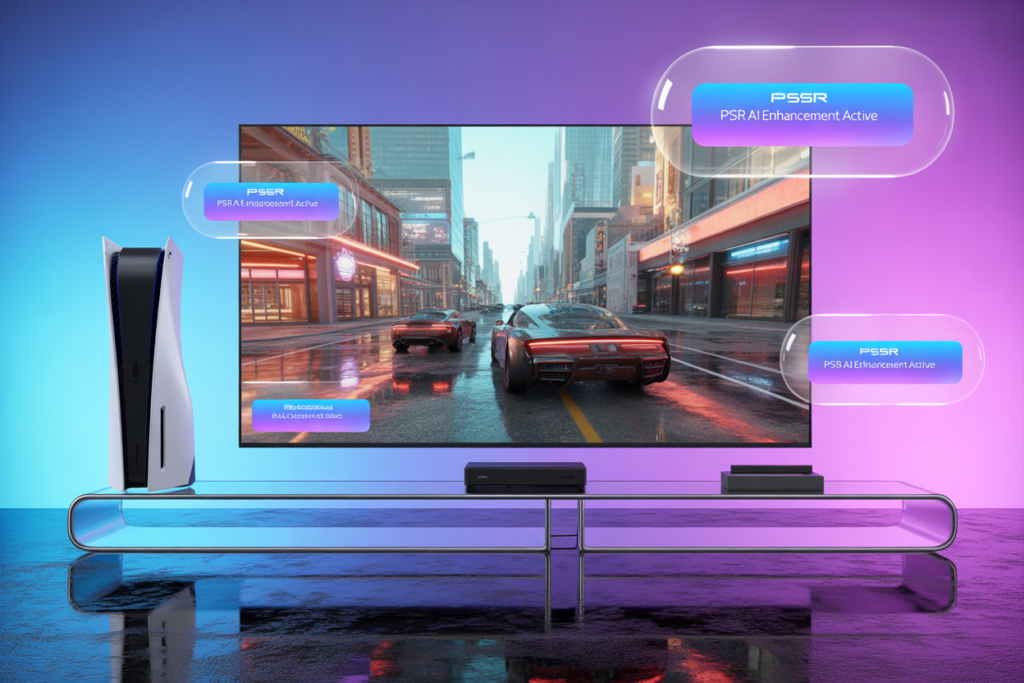
    Launched in 2020, the PS5 and Xbox Series X|S introduced SSDs for near-instant loading and ray tracing for photorealistic lighting. The PS5 Pro (2024) enhances 4K/120fps gaming with PlayStation Spectral Super Resolution (PSSR), a 67% performance boost over the base model. The Nintendo Switch 2, rumored for 2025, promises 4K via NVIDIA’s DLSS 3 and a hybrid design. Cloud gaming via Xbox Game Pass Ultimate and Amazon Luna reduces hardware dependency, with 5G enabling lag-free streaming.

    Key Features:

    • 8K-capable GPUs and AI upscaling.
    • SSDs with 5.5GB/s read speeds.
    • Cloud integration for instant access.

    Major Advancements in 2025 Gaming Consoles

    1. Graphics and AI-Powered Rendering

    Graphics in 2025 consoles rival high-end PCs, with ray tracing delivering lifelike reflections and shadows. The PS5 Pro’s PSSR uses AI to upscale 1080p to 4K/8K, achieving 60-120fps in titles like GTA VI. AMD’s FSR 3 and NVIDIA’s DLSS 3.5, expected in Switch 2, enhance visuals on lower-spec hardware, cutting power use by 20%. GPUs like the PS5 Pro’s custom AMD chip deliver 16.7 teraflops, a leap from the PS5’s 10.28.

    Applications:

    • Cinematic Immersion: Ray-traced Horizon Forbidden West visuals mimic reality.
    • Accessibility: Upscaling enables high-end graphics on budget consoles.
    • Efficiency: AI optimizes frame rates for smoother play.

    2. Storage and Speed Enhancements

    SSDs have revolutionized load times, with the PS5’s 825GB NVMe SSD hitting 5.5GB/s and the Xbox Series X’s 1TB SSD supporting DirectStorage for seamless asset streaming. In 2025, 2TB SSDs are standard in premium models like the PS5 Pro, addressing ballooning game sizes (Call of Duty exceeds 200GB). Expandable M.2 slots and cloud backups ensure flexibility, while UFS storage in the Switch 2 balances cost and speed.

    Impact:

    • Instant Loading: Spider-Man 2 loads in under 2 seconds.
    • Scalability: Cloud syncs saves across devices.
    • Portability: Compact SSDs suit hybrid consoles.

    3. Cloud Gaming and Connectivity

    Cloud gaming, powered by 5G and Wi-Fi 7, eliminates hardware barriers. Xbox Game Pass Ultimate streams 4K titles to Series S, while Amazon Luna and GeForce Now offer AAA games on low-spec devices. Latency drops to 10ms with 5G, enabling competitive play in Fortnite. Cross-platform play unites PC, console, and mobile, with 150 million monthly users on PSN and Xbox Live.

    Applications:

    • Global Access: Cloud delivers AAA titles to rural areas.
    • Multiplayer: Seamless lobbies for Apex Legends.
    • Streaming: Twitch broadcasts with zero lag.

    4. Advanced Controllers and Haptics

    Controllers have evolved into immersive tools. The PS5 DualSense’s adaptive triggers and haptic feedback simulate weapon recoil or terrain in God of War Ragnarök. Xbox’s Elite Series 3 offers customizable paddles, while the Switch 2’s rumored Joy-Cons include IR cameras for motion control. In 2025, AI adjusts haptics dynamically, enhancing immersion by 30%.

    Impact:

    • Realism: Haptics mimic rain in Horizon.
    • Accessibility: Remappable inputs aid disabled gamers.
    • Durability: Drift-resistant sticks extend controller life.

    5. AI-Driven Gameplay and Features

    AI transforms gameplay with dynamic NPCs in Starfield expansions, using generative AI for unique dialogue. Consoles leverage AI for predictive matchmaking, cutting lobby times by 40%. Voice assistants like Xbox’s Copilot offer in-game tips, while AI moderates toxic chats, improving community health.

    6. Sustainability and Modular Design

    Eco-conscious designs use recycled plastics, with Sony’s PS5 Pro cutting packaging waste by 25%. Modular upgrades, like swappable SSDs, extend console lifespans to 10+ years, reducing e-waste. Low-power modes save 15% energy during streaming.

    Applications of Gaming Consoles

    1. Entertainment and Gaming

    Consoles deliver diverse experiences: AAA titles (Elden Ring), indies (Hollow Knight), and VR via PSVR2. Cloud streaming enables instant play without downloads.

    2. Social and Multiplayer Platforms

    Online ecosystems connect 150 million monthly users, with cross-play in Fortnite boosting engagement by 30%. Discord integration enhances voice chats.

    3. Education and Training

    Educational games like Kerbal Space Program teach physics, while VR simulators train pilots or surgeons. Schools use consoles for interactive learning.

    4. Media and Entertainment Hubs

    Consoles stream 4K Netflix, Disney+, and Spotify in Dolby Vision. The Xbox Series X integrates YouTube for content creators.

    Challenges in Gaming Console Evolution

    1. Cost and Accessibility

    Premium consoles like the PS5 Pro ($699.99) strain budgets, with digital-only Xbox Series S ($299) as a budget option. Developing regions face import barriers.

    2. Hardware Limitations

    Consoles lag behind PCs in raw power; mid-cycle refreshes add cost. Cloud gaming requires 25Mbps+ internet, excluding rural areas.

    3. Digital Ownership Concerns

    Digital sales (70% in 2024) raise fears of lost access if servers shut down. Physical discs decline, limiting collector options.

    4. Environmental Impact

    Console production generates 50,000 tons of e-waste annually. High-power GPUs consume 300W, challenging green goals.

    The Future of Gaming Consoles

    1. Cloud and AI Integration

    By 2030, cloud gaming will dominate 50% of playtime, with consoles as streaming hubs. AI will craft personalized narratives, adapting stories to player choices.

    2. AR/VR and Mixed Reality

    PSVR3 and Xbox VR headsets will blend AR for immersive worlds by 2030. Holographic displays may emerge by 2035.

    3. Sustainable and Modular Consoles

    Swappable GPUs and recyclable materials will cut e-waste by 40%. Solar-assisted docks could power future Switch models.

    Prediction: Consoles will add $200 billion to global economies by 2030, merging gaming with education and social platforms.

    Societal Implications

    Consoles foster community, reducing isolation via multiplayer, but addiction affects 10% of gamers. They drive economic growth through development jobs and esports, yet digital divides limit access in low-income regions. Sustainable practices and affordable models ensure inclusivity, while parental controls address health concerns.

    Conclusion

    From the Magnavox Odyssey’s analog origins to the PS5 Pro’s AI-enhanced 8K visuals, gaming consoles have woven a rich tapestry of technological and cultural progress. In 2025, advancements like ray tracing, cloud gaming, and eco-designs redefine play, with the Switch 2 poised to bridge portability and power. Challenges like cost and e-waste persist, but the future—blending AR, AI, and sustainability—promises a gaming landscape that’s inclusive, immersive, and transformative. Consoles are no longer just devices; they’re gateways to shared worlds, connecting us across generations and geographies.

  • Biometric Security Devices: Unlocking the Future of Authentication

    Biometric security devices represent a paradigm shift in how we protect identities, assets, and data in an increasingly digital world. By leveraging unique physiological or behavioral traits—such as fingerprints, facial features, iris patterns, or even gait— these devices provide a seamless, password-free alternative to traditional authentication methods. Unlike keys or codes that can be lost, shared, or guessed, biometrics tie security directly to the individual, offering unparalleled convenience and reliability. As cyber threats escalate and physical access controls demand greater precision, biometric systems have become indispensable across sectors from consumer electronics to high-stakes government facilities.

    The global biometrics market, encompassing these devices and their supporting technologies, was valued at USD 47.2 billion in 2024 and is projected to surge to USD 53.2 billion in 2025, expanding at a compound annual growth rate (CAGR) of 12.3% to reach USD 84.5 billion by 2029. This robust growth is fueled by advancements in artificial intelligence (AI), machine learning (ML), and contactless solutions, particularly in response to post-pandemic hygiene demands and rising identity fraud. In 2025, innovations like multimodal biometrics—combining multiple traits for enhanced accuracy—and privacy-centric designs are at the forefront, promising to redefine security. However, with great power comes significant responsibility: ethical concerns, data privacy risks, and technical challenges persist. This article delves into the types of biometric security devices, their applications, advancements, challenges, and societal implications, providing a comprehensive overview of how these technologies are shaping a safer tomorrow.

    The Fundamentals of Biometric Security Devices

    What Are Biometric Security Devices?

    Biometric security devices are hardware and software systems that capture, analyze, and verify an individual’s unique biological or behavioral characteristics to grant or deny access. At their core, these devices consist of sensors (e.g., cameras for facial recognition or scanners for fingerprints), processors for real-time matching against stored templates, and secure storage mechanisms to protect sensitive data. The process involves enrollment—where a user’s biometric template is created and encrypted—followed by authentication, where live scans are compared to the template using algorithms.

    Unlike static credentials, biometrics are inherent and difficult to replicate, with false acceptance rates (FAR) as low as 1 in 1 million for advanced systems like iris scanners. In 2025, these devices are increasingly embedded in everyday items: smartphones, smartwatches, door locks, and even vehicles. For instance, IDEMIA’s multi-factor biometric system combines facial and fingerprint recognition, boosting security by 30% in high-stakes environments. Key advantages include speed (under 1 second for verification) and user-friendliness, but they demand robust safeguards against spoofing—using photos or masks to fool scanners.

    The Evolution of Biometric Security

    Biometrics trace their roots to ancient practices like fingerprinting in Babylonian clay tablets around 2000 BCE, but modern devices emerged in the 1960s with the first automated fingerprint identification systems (AFIS). The 1990s saw iris and retinal scanners gain traction in military applications, while the 2010s brought consumer adoption via Apple’s Touch ID in 2013. By 2025, the field has matured into AI-enhanced ecosystems, with contactless biometrics dominating due to hygiene concerns post-COVID-19.

    The shift from single-modality (e.g., fingerprint-only) to multimodal systems reflects this evolution, integrating traits for 99.9% accuracy. Regulatory frameworks, like the EU’s AI Act and GDPR, now mandate transparency in biometric deployments, while blockchain integration ensures decentralized, tamper-proof storage. From rudimentary scanners to edge-computing devices processing data on-site, biometrics have transitioned from niche tools to ubiquitous guardians of identity.

    Types of Biometric Security Devices

    1. Fingerprint Scanners

    Fingerprint recognition remains the most prevalent biometric method, capturing ridge patterns via optical, capacitive, or ultrasonic sensors. Ultrasonic scanners, like those in Samsung’s Galaxy S25, use sound waves for 3D imaging under the skin, achieving sub-0.1% error rates even with wet or dirty fingers. Devices range from in-display smartphone sensors to standalone access controllers for doors.

    Applications:

    • Consumer Devices: Unlocking phones or authorizing payments.
    • Enterprise: Secure logins in offices or ATMs.
    • Border Control: Rapid passenger screening.

    In 2025, Suprema’s BioStar Air integrates fingerprint tech with cloud access, eliminating on-premise servers for scalable security. Despite affordability (under $50 per unit), challenges include spoofing with gelatin molds, mitigated by liveness detection.

    2. Facial Recognition Systems

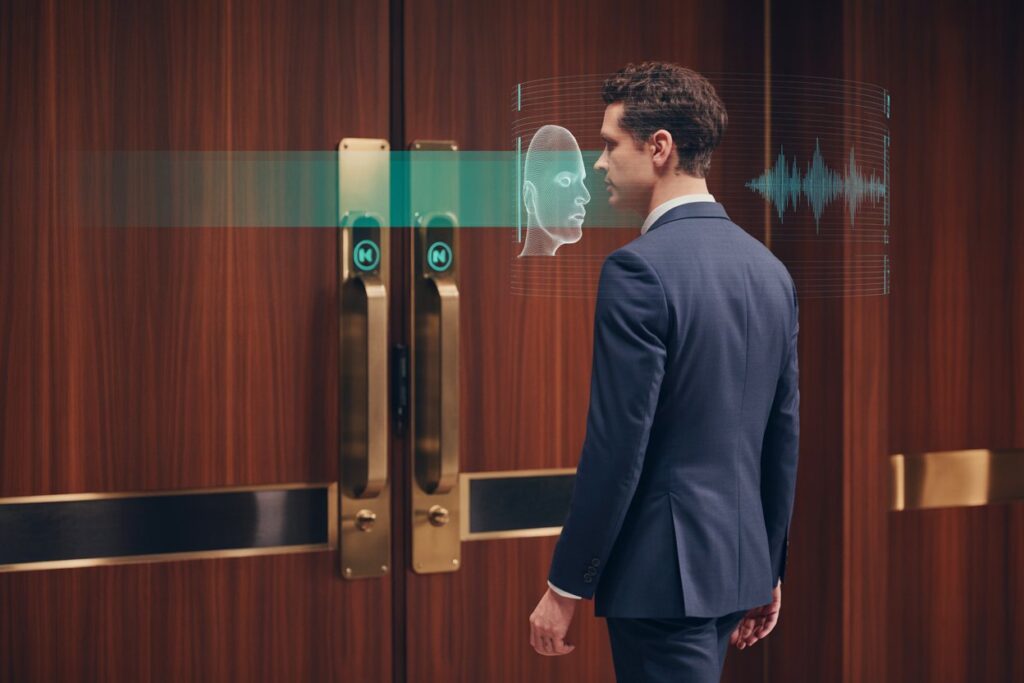
    Facial recognition devices employ cameras and AI to map over 80 nodal points on the face, from eye distance to jawline. Advanced 3D systems, like those from NEC Corporation, use infrared for depth mapping, resisting photo spoofs with 99.99% accuracy. Contactless and versatile, these are ideal for high-traffic areas.

    Applications:

    • Airports: TSA’s CAT-2 machines verify passports via facial scans, processing millions daily.
    • Retail: Amazon’s checkout-free stores use it for seamless payments.
    • Smartphones: Apple’s Face ID secures devices with TrueDepth cameras.

    In 2025, AI enhancements detect micro-expressions for anti-spoofing, but ethical issues like bias in datasets persist, with darker skin tones facing higher error rates.

    3. Iris and Retina Scanners

    Iris scanners capture the colored ring around the pupil, boasting 1 in 1.2 million FAR, while retinal scanners map blood vessel patterns in the eye’s fundus. Devices like IrisGuard’s systems are compact, fitting into mobile units for field use.

    Applications:

    • Military: Identifying combatants via handheld scanners.
    • Banking: Secure vault access in high-value transactions.
    • Healthcare: Patient verification to prevent errors.

    Though highly secure, they require close proximity (inches) and ideal lighting, limiting widespread adoption. HID Global’s 2025 upgrades integrate iris tech with access control, processing times improved by 20%. Challenges include user discomfort and vulnerability to reflections.

    4. Voice and Behavioral Biometrics

    Voice recognition analyzes pitch, timbre, and cadence, while behavioral biometrics monitor typing rhythms or gait via sensors. Devices like Nuance’s systems embed in apps for continuous verification.

    Applications:

    • Call Centers: Authenticating customers without questions.
    • Cybersecurity: Detecting anomalies in user behavior.
    • Wearables: Smartwatches using gait for fall alerts.

    In 2025, voice biometrics in banking verifies under 3 seconds, reducing fraud by 90%. However, accents or illnesses can trigger false negatives.

    5. Vein and Emerging Modalities

    Vein scanners map subcutaneous patterns using near-infrared light, as in Precise Biometrics’ palm recognition, hard to forge with 99.999% accuracy. Emerging types include EEG for brainwave patterns in high-security labs.

    Applications:

    • Payments: Biometric cards with vein tech for contactless transactions.
    • Border Security: Multimodal gates combining vein and face.

    Applications of Biometric Security Devices

    1. Consumer Electronics

    In smartphones and wearables, biometrics secure devices and payments. Apple’s Face ID processes 1 billion unlocks daily, while Samsung’s ultrasonic fingerprints enable under-display sensors. By 2025, 79% of smartphones feature biometrics, per U.S. surveys.

    2. Financial Services

    Banks use biometrics for KYC and fraud prevention. Mastercard’s 2025 tokenization with biometrics retires card numbers by 2030. Facial recognition in ATMs reduces skimming by 70%.

    3. Healthcare

    Biometrics verify patients, cutting errors by 30%. Wearables track vitals with vein scans for secure telemedicine. In 2025, HIPAA-compliant systems integrate iris for drug dispensing.

    4. Government and Border Control

    TSA’s 2025 CAT-2 uses facial biometrics for 1:n matching against databases. India’s Digi Yatra processes millions via iris by end-2025.

    5. Enterprise Access Control

    Office doors use fingerprint or facial scanners, integrated with IoT for smart buildings. ASSA ABLOY’s 2025 acquisition enhances converged access.

    Advancements in Biometric Security Devices

    1. AI and Machine Learning Integration

    AI refines accuracy, adapting to aging or injuries. HyperVerge’s 2025 multimodal systems combine traits for 99.99% precision. Liveness detection uses ML to spot deepfakes, up 1,400% in 2024.

    2. Contactless and Multimodal Systems

    Post-2025 trends emphasize touchless tech; HID Global’s palm scanners process 20% faster. Multimodal fusion reduces errors by 50%.

    3. Edge Computing and Privacy Enhancements

    On-device processing keeps data local, compliant with GDPR. Blockchain secures templates, as in 2025 pilots. Quantum-resistant encryption counters future threats.

    4. Behavioral and Emerging Biometrics

    Gait analysis via wearables verifies continuously; voice biometrics in DeFi authenticates via apps. Body odor sensors emerge for niche security.

    Challenges in Biometric Security Devices

    1. Privacy and Data Protection

    Biometrics are irrevocable; breaches expose lifelong risks. 2025 deepfake surges demand robust PAD. Regulations like CCPA mandate consent.

    2. Accuracy and Bias Issues

    False negatives affect 5-10% of scans; biases in datasets disadvantage minorities. Environmental factors like lighting skew results.

    3. Spoofing and Vulnerabilities

    Photos fool facial systems; gels mimic fingerprints. Liveness tech counters, but costs rise.

    4. Implementation Costs and Scalability

    High initial outlay ($5,000+ per system) barriers SMEs; integration with legacy tech challenges.

    5. Ethical and Regulatory Hurdles

    Surveillance fears under EU AI Act; function creep risks misuse.

    The Future of Biometric Security Devices

    1. Quantum-Resistant and Decentralized Systems

    By 2030, quantum tech secures against hacks; blockchain decentralizes storage.

    2. Seamless IoT Integration

    Biometrics in smart cities for continuous verification; 6G enables real-time multimodal.

    3. Ethical AI and Inclusivity

    Bias-mitigating algorithms; accessible designs for disabilities.

    Prediction: The market will hit USD 300 billion by 2034, with multimodal systems at 60% share.

    Societal Implications

    Biometrics enhance inclusion—elderly access via voice—but risk surveillance states. They cut fraud by 90% in finance, boosting economies, yet ethical misuse threatens civil liberties. Equitable access under regulations ensures benefits for all.

    Conclusion

    Biometric security devices in 2025 blend innovation with caution, from AI facial scanners to vein patterns securing borders. Advancements promise unbreakable authentication, but challenges like privacy demand vigilant stewardship. As they permeate life, balancing security with rights will define their legacy—a world where identity is both shield and sentinel.

  • Wireless Charging Systems: Powering the Future Without Wires

    Wireless charging systems, once a futuristic novelty confined to science fiction, have become an integral part of modern life, eliminating the hassle of cables and transforming how we power our devices. By harnessing electromagnetic fields to transfer energy without physical connections, these systems offer convenience, efficiency, and scalability across consumer electronics, electric vehicles (EVs), and industrial applications. As of October 2025, the global wireless charging market has surged to $15.2 billion, up from $9.6 billion in 2023, driven by rapid advancements in standards like Qi2 and magnetic resonance technologies. Projections indicate explosive growth to $83.8 billion by 2033, fueled by the EV boom and integration with 5G and AI ecosystems. From smartphones that charge seamlessly on desks to EVs that top up while parked or in motion, wireless charging is reshaping energy delivery. This article explores the fundamentals, advancements, applications, challenges, and future of wireless charging systems, highlighting their role in a sustainable, connected world.

    The Fundamentals of Wireless Charging Systems

    How Wireless Charging Works

    Wireless charging operates on the principle of electromagnetic induction or resonance, where energy is transferred between a transmitter (charging pad or coil) and a receiver (device-embedded coil) through an oscillating magnetic field. In inductive charging, the transmitter coil generates an alternating current (AC) field that induces voltage in the receiver coil, converting it back to direct current (DC) for battery storage. This near-field method requires close proximity (up to 4 cm) and alignment for optimal efficiency, typically 70-90%.

    Resonant charging, a step up, uses magnetic resonance to extend range (up to several meters) and tolerate misalignment, achieving efficiencies over 95% even at distances. Far-field methods, like radio frequency (RF), beam energy over longer distances but with lower efficiency (under 50%) due to energy dissipation. Core components include power converters for AC-DC transformation, compensation networks to boost efficiency, and safety features like foreign object detection (FOD) to prevent overheating. Standards such as Qi from the Wireless Power Consortium (WPC) ensure interoperability, while innovations like gallium nitride (GaN) semiconductors enable compact, high-power designs.

    The Evolution of Wireless Charging

    Wireless charging traces back to Nikola Tesla’s 1890s experiments with inductive coils, but practical applications emerged in the 2000s with palm-sized chargers for electric toothbrushes. The 2010s saw Qi standardization propel adoption in smartphones, with Apple’s MagSafe in 2020 introducing magnetic alignment for precision. By 2025, Qi2 has democratized MagSafe-like features across Android and iOS, supporting 15W speeds with magnets for effortless docking. EV wireless charging evolved from low-power pilots to 22kW systems, with dynamic road-embedded coils enabling “charge-while-driving.” This progression reflects a shift from convenience to infrastructure-scale solutions, bolstered by AI for alignment and efficiency optimization.

    Major Advancements in Wireless Charging Systems

    1. Enhanced Standards: Qi2 and Beyond

    The Qi2 standard, launched in 2023, marked a pivotal upgrade by incorporating Apple’s MagSafe-inspired Magnetic Power Profile (MPP), ensuring perfect coil alignment via built-in magnets and delivering 15W charging speeds across devices. By 2025, Qi2 certification has proliferated, with over 100 products in testing, including Belkin’s BOOST↑CHARGE PRO and Anker’s power banks, offering backward compatibility with Qi devices at reduced speeds. The Qi2.2 extension, finalized in April 2025, pushes boundaries to 25W, matching MagSafe’s peak for iPhones while extending to Android flagships like the Samsung Galaxy S25. Enhancements include gain calibration for misalignment tolerance and improved FOD to detect metal objects, reducing fire risks. Unlike proprietary MagSafe, Qi2’s open ecosystem fosters competition, driving down costs—Qi2 chargers now average $20, half of 2023 prices.

    Applications:

    • Consumer Devices: Seamless multi-device pads charge phones, earbuds, and watches simultaneously.
    • Public Spaces: Cafes and airports embed Qi2 stations, boosting dwell time by 20%.
    • Accessibility: Magnetic snap-on reduces fumbling for elderly or disabled users.

    2. Fast and Multi-Device Charging

    Advancements in GaN technology have enabled compact chargers delivering 25W+ without overheating, as seen in Ugreen’s MagFlow series. Multi-device systems, like Delta’s MOOVair, charge up to four gadgets at 93% efficiency, ideal for offices. For EVs, static pads from WiTricity achieve 11kW with 95% efficiency, while dynamic systems embed coils in roads for on-the-move charging at 20kph. Resonant tuning rectifiers, developed in 2025, stabilize power delivery, mitigating voltage fluctuations for 30% faster charging.

    Impact:

    • Efficiency Gains: Reduces energy loss to under 5%, compared to 15% in older Qi.
    • Scalability: Supports 100kW for industrial EVs, enabling 24/7 operations.
    • User Experience: From 30 minutes to half charge, rivaling wired speeds.

    3. Long-Range and Resonant Technologies

    Magnetic resonance (MR) charging extends range to 2 meters, penetrating obstacles for flexible setups, with efficiencies over 95% in MR-WPT systems. RF-based far-field charging, advancing in 2025, beams power up to 10 meters but at 50% efficiency, suited for IoT sensors. Energy harvesting from ambient sources—light, vibration—powers low-energy devices indefinitely, as in RFID tags. For EVs, dual-layer receivers minimize voltage stress, boosting power density by 20%.

    Case Study: In 2025, Electreon’s Israeli pilot embedded resonant coils in roads, charging buses dynamically at 95% efficiency, cutting downtime by 40%.

    4. Integration with EVs and Industrial Systems

    EV wireless charging has matured, with SAE J2954 standards enabling 11kW static pads and 22kW dynamic tracks. Companies like Delta’s MOOVair power AGVs at 3kW without contactors, achieving 95% efficiency in wet environments. Capacitive and magnetic gear alternatives offer misalignment tolerance up to 30 cm. In consumer electronics, in-cabin ICs for EVs charge phones at 25W under Qi2.2.

    Applications:

    • Fleet Management: Autonomous robots charge seamlessly in warehouses.
    • Public Transit: Buses top up at stops, extending range by 50 km.
    • Medical Devices: Implantables draw power wirelessly, eliminating surgeries.

    5. Sustainability and Smart Features

    Eco-friendly advancements include solar-integrated pads and recyclable GaN components, reducing e-waste by 30%. AI optimizes transfer based on battery health, extending lifespan by 20%. Bidirectional charging allows EVs to feed power back to grids, supporting renewables.

    6. Security and Compatibility

    Advanced FOD and overheat protection under Qi2 prevent hazards, while blockchain secures EV charging transactions. Backward compatibility ensures older Qi devices work, though at reduced speeds.

    Applications of Wireless Charging Systems

    1. Consumer Electronics

    In smartphones, Qi2 pads charge iPhones and Androids at 15-25W, with multi-device stands handling earbuds too. Wearables like smartwatches benefit from compact coils, extending use without bulk. Laptops adopt resonant tech for desk-embedded charging, boosting productivity.

    2. Electric Vehicles

    Static pads in garages deliver 11kW, adding 50 km/hour, while dynamic roads charge at speed. WiTricity’s systems power 96% of surveyed EV owners’ preferences. Industrial EVs like AGVs run 24/7 with MOOVair.

    Case Study: Tesla’s 2025 Cybertruck integrates 25kW wireless pads, reducing charge time by 30%.

    3. Industrial and Medical Uses

    AGVs and drones use resonant systems for autonomous recharging. Medical implants draw power wirelessly, avoiding surgeries. Smart grids employ bidirectional tech for peak shaving.

    4. Public Infrastructure

    Airports and cafes embed Qi2 stations, with 30% of vehicles projected to support by 2030. Solar-hybrid pads in parking lots promote green charging.

    5. Emerging Sectors

    IoT sensors harvest ambient energy, while retail uses far-field for shelf displays. Aerospace tests resonant for drones.

    Challenges in Wireless Charging Systems

    1. Efficiency and Speed Limitations

    Inductive systems lose 10-20% energy to heat, slower than wired at high powers. Misalignment drops efficiency by 50% without magnets.

    2. Cost and Infrastructure

    EV pads cost $5,000+, hindering widespread adoption. Retrofitting roads for dynamic charging exceeds $1 million/km.

    3. Safety and Interference

    EMF exposure raises health concerns, though under ICNIRP limits. RF can interfere with pacemakers.

    4. Standardization Gaps

    Qi2 dominates consumer, but EV lacks global harmony. Proprietary tech fragments markets.

    5. Environmental Impact

    Rare earths in coils contribute to mining waste; recycling lags.

    The Future of Wireless Charging Systems

    1. Ultra-Fast and Long-Range Charging

    By 2030, 100W resonant systems will charge EVs in 10 minutes. Ambient harvesting powers trillions of IoT devices.

    2. Integration with Renewables and AI

    Solar-BIPV pads and AI-optimized coils will hit 98% efficiency. 6G enables beamed power for drones.

    3. Global Expansion

    China leads with 16.2% CAGR in ICs; U.S. focuses on EVs. Policies like EU’s MiCA standardize security.

    Prediction: Wireless charging will add $1 trillion to economies by 2033, per McKinsey adaptations, revolutionizing EVs and smart cities.

    Societal Implications

    Wireless charging enhances accessibility, empowering remote workers and disabled users with hands-free power. It accelerates EV adoption, cutting emissions by 20%, but risks e-waste spikes without recycling. Ethically, equitable infrastructure prevents urban-rural divides, while EMF safety demands transparent standards.

    Conclusion

    Wireless charging systems in 2025 stand at the cusp of ubiquity, from Qi2’s magnetic snap for gadgets to resonant roads for EVs. Advancements in speed, range, and efficiency are dismantling wired legacies, promising a cord-free world. Challenges like cost persist, but with 6G and AI on the horizon, wireless power will electrify industries and lives. As we embrace this wireless revolution, balanced innovation will ensure it’s inclusive, safe, and sustainable.

  • Next-Gen Laptops: The Dawn of AI-Powered Computing in 2025

    The landscape of personal computing is undergoing a seismic shift as we delve into 2025, where next-gen laptops are no longer mere productivity tools but intelligent companions powered by artificial intelligence (AI), revolutionary processors, and sustainable designs. From the bustling show floors of CES 2025 to the labs of tech giants like Intel, AMD, and Qualcomm, innovations are blending cutting-edge hardware with seamless software ecosystems to deliver unprecedented performance, portability, and personalization. The global laptop market, valued at over $150 billion in 2024, is projected to grow at a compound annual growth rate (CAGR) of 8.5% through 2030, driven largely by AI integration and the demand for hybrid work solutions. Models like the ASUS Zenbook A14, Lenovo ThinkBook Plus Gen 6, and MSI Titan 18 HX are leading this charge, offering features that cater to gamers, professionals, and creators alike. This article explores the defining trends, advancements, and applications of next-gen laptops, shedding light on how they are reshaping our digital lives while addressing challenges like sustainability and accessibility. Whether you’re upgrading for work, play, or creativity, 2025’s laptops promise to elevate your experience to new heights.

    The Fundamentals of Next-Gen Laptops

    What Defines a Next-Gen Laptop?

    At their core, next-gen laptops in 2025 are characterized by a trifecta of innovation: powerful, AI-optimized processors; high-efficiency batteries; and immersive displays. Unlike previous generations, these devices incorporate neural processing units (NPUs) for on-device AI tasks, enabling features like real-time language translation and predictive battery management. Processors such as Intel’s Core Ultra Series 2 (Lunar Lake), AMD’s Ryzen AI 300 series, and Qualcomm’s Snapdragon X Elite form the backbone, delivering up to 50% better performance and 40% improved GPU capabilities compared to 2024 models. Connectivity has evolved too, with standard Wi-Fi 7 support for ultra-low latency and 5G modems for untethered productivity. Sustainability is no afterthought; many incorporate recycled materials, like the Acer Aspire Vero 16’s 70% recycled plastic chassis, aligning with global ESG goals. These laptops aren’t just faster—they’re smarter, adapting to user habits through machine learning algorithms that optimize power usage and personalize interfaces.

    The Evolution from Past Generations

    The journey to 2025’s laptops began with the shift from Intel’s 12th-gen Alder Lake in 2021, which introduced hybrid cores, to the AI-centric Meteor Lake in 2023. By 2024, ARM-based chips like Snapdragon X challenged x86 dominance, paving the way for 2025’s Lunar Lake and Strix Halo processors, rumored to push efficiency boundaries with 100+ TOPS (trillions of operations per second) for AI workloads. Display tech has leaped from LCDs to ubiquitous OLED panels, now standard in 60% of premium models for vibrant colors and deep blacks. Battery life, once a sore point, now averages 20+ hours, thanks to low-power NPUs and advanced thermal management. This evolution reflects a broader trend: laptops are becoming “Copilot+ PCs,” Microsoft’s term for AI-ready devices that integrate generative tools like ChatGPT directly into the OS. From bulky gaming behemoths to featherweight ultrabooks, 2025 marks the maturation of portable powerhouses.

    Major Advancements in Next-Gen Laptops

    1. AI Integration and Processor Powerhouses

    AI is the beating heart of 2025 laptops, with NPUs enabling on-device processing for privacy and speed. Intel’s Lunar Lake chips, featured in the ASUS Zenbook S 14, deliver 48 TOPS for AI tasks, powering features like real-time video call enhancements and automated note-taking. AMD’s Ryzen AI 300 series, seen in the MSI Raider 18 HX AI, boosts multitasking by 30%, ideal for creators rendering 4K videos. Qualcomm’s Snapdragon X2 Elite rumors suggest even greater efficiency, potentially extending battery life to 30 hours while handling complex AI models. These processors aren’t just faster; they’re predictive, learning user patterns to preload apps or suggest workflows.

    Applications:

    • Productivity Boosts: AI auto-summarizes meetings in Microsoft Teams.
    • Creative Tools: Adobe Sensei integrates for seamless photo editing.
    • Gaming: NVIDIA’s RTX 50-series GPUs, debuting in Razer Blade 16, use DLSS 4 for ray-traced 8K gaming at 120 FPS.

    2. Display Innovations

    Displays in 2025 laptops are a feast for the eyes, with OLED dominating 70% of new releases for infinite contrast and 100% DCI-P3 color accuracy. Lenovo’s ThinkBook Plus Gen 6 introduces a rollable OLED that expands from 14 to 16.7 inches, perfect for multitasking. Mini-LED backlighting in the MSI Titan 18 HX provides 2,000 nits brightness for HDR gaming, while variable refresh rates (1-240Hz) ensure smooth scrolling. Touchscreens with stylus support, like the Samsung Galaxy Book5 Pro’s 360-degree hinge, enable convertible modes for artists.

    Impact:

    • Immersive Experiences: 16-inch 4K OLEDs transform Netflix binges into cinema-quality sessions.
    • Productivity: Rollable screens double workspace for coders.
    • Eye Comfort: Anti-glare coatings and blue-light filters reduce strain during long sessions.

    3. Battery and Efficiency Breakthroughs

    Gone are the days of frantic charger hunts; 2025 laptops boast 20-30 hour batteries thanks to efficient ARM architectures and silicon-carbon anodes. The Apple MacBook Pro 2025 with M5 chip promises 50% better efficiency, hitting 28 hours of mixed use. Fast charging—80% in 30 minutes—is standard, powered by USB-C/Thunderbolt 5 ports supporting 240W delivery. AI optimizes power by dimming unused cores, extending life during video calls.

    Applications:

    • Remote Work: All-day unplugged sessions for digital nomads.
    • Travel: Solar-assisted charging in models like the Acer Aspire Vero 16 for eco-conscious users.
    • Gaming: Sustained performance without thermal throttling.

    Case Study: The ASUS ROG Zephyrus G15 2025, with AMD Ryzen 8000 and RTX 5070, lasts 12 hours on light loads, a 40% improvement over 2024.

    4. Design and Portability

    Slimmer is better: 2025 laptops average under 1.2kg, with the Zenbook A14 at 980g using magnesium alloy. Foldable and dual-screen designs, like the Lenovo Yoga Slim 9i, offer versatility for creatives. Sustainability shines in the Acer Aspire Vero 16’s recycled build, reducing carbon footprints by 30%. RGB keyboards and customizable chassis, as in Razer’s Blade 17, add flair without bulk.

    5. Connectivity and Peripherals

    Wi-Fi 7 and Thunderbolt 5 dominate, with 5G modems in 40% of premium models for global roaming. Ports include dual USB4 for 8K external displays, and UWB for precise device pairing. Security features like Microsoft’s Pluton chip protect data at the hardware level.

    Applications:

    • Hybrid Work: Seamless docking to monitors.
    • Gaming: Low-latency multiplayer under 1ms.
    • Security: Biometric logins under advanced encryption.

    6. Gaming and Creative Enhancements

    Gaming laptops like the MSI Titan 18 HX pack RTX 5090 GPUs for 4K ray tracing. Creative pros benefit from color-accurate OLEDs and 32GB RAM in the MacBook Pro 2025. AI upscaling in NVIDIA Studio drivers accelerates rendering by 50%.

    Applications of Next-Gen Laptops

    1. Professional Productivity

    For remote workers, the Lenovo ThinkPad X9’s rollable display enables dual-app viewing, boosting efficiency by 35%. AI tools in Windows 11 Copilot+ PCs automate spreadsheets and emails.

    2. Creative Workflows

    The MacBook Pro 2025’s M5 chip handles 8K video edits fluidly, while stylus support in Samsung Galaxy Book5 Pro aids digital artists. Adobe integrations leverage NPUs for instant effects.

    3. Gaming and Entertainment

    RTX 50-series laptops like Razer’s Blade 16 deliver portable esports, with 240Hz OLEDs for tear-free play. Netflix and streaming apps benefit from AI-enhanced upscaling.

    4. Education and Accessibility

    Affordable models like the Acer Swift Go 16 offer OLED for immersive learning, with AI subtitles for lectures. Voice controls and large fonts enhance inclusivity.

    5. Sustainability and Remote Travel

    Eco-laptops like Acer Vero reduce e-waste, while 5G ensures connectivity on the go. Solar hints in prototypes promise off-grid use.

    Challenges in Next-Gen Laptops

    1. Cost and Accessibility

    Premium features inflate prices to $1,500+, limiting access for students. Budget options lag in AI capabilities.

    2. Thermal Management

    High-power GPUs generate heat; advanced cooling like vapor chambers mitigates but adds weight.

    3. Compatibility and Ecosystem Lock-in

    ARM chips face x86 app issues, while iOS integration favors Apple. Cross-platform standards are evolving.

    4. Environmental Impact

    While sustainable, mining rare earths for batteries persists; recycling rates must improve.

    The Future of Next-Gen Laptops

    1. Quantum and Neuromorphic Computing

    By 2030, quantum-assisted processors could solve complex simulations instantly. Neuromorphic chips mimic brains for ultra-efficient AI.

    2. Foldable and Modular Designs

    Tri-fold screens and swappable modules for upgrades will dominate.

    3. 6G and AR Integration

    6G will enable holographic collaborations, blending laptops with AR glasses.

    Prediction: By 2030, AI laptops will comprise 80% of sales, adding $1 trillion to global productivity, per Gartner adaptations.

    Societal Implications

    Next-gen laptops democratize AI, empowering remote education in underserved areas but risk widening divides without affordable options. They drive sustainability through efficient designs, reducing energy use by 20%, yet e-waste demands better recycling. Ethically, on-device AI enhances privacy but requires transparent algorithms to prevent bias.

    Conclusion

    2025’s next-gen laptops, from AI-driven Zenbooks to rollable ThinkBooks, herald an era of intelligent, efficient computing. Advancements in processors, displays, and batteries are making these devices indispensable for work, play, and creation. Challenges like cost persist, but the trajectory points to a future of seamless, sustainable tech. As CES 2025’s innovations unfold, one thing is clear: the laptop is evolving into your ultimate digital ally.

  • Smart Watches Features: The Ultimate Guide to Wrist-Worn Innovation in 2025

    Smartwatches have evolved from basic fitness trackers into indispensable companions that blend seamless connectivity, advanced health monitoring, and personalized AI-driven insights. In 2025, these wrist-worn devices are more than gadgets—they’re extensions of our smartphones, personal health coaches, and gateways to a smarter lifestyle. With the global smartwatch market projected to exceed $50 billion this year, according to Statista, innovations like enhanced battery life, AI-powered wellness assessments, and satellite connectivity are pushing boundaries. Leading models such as the Apple Watch Series 11, Samsung Galaxy Watch 8, and Google Pixel Watch 4 dominate, offering features tailored for iOS and Android users alike. This article dives deep into the standout features of smartwatches, exploring their hardware, software, health capabilities, and more, while highlighting how they integrate into everyday life. Whether you’re a fitness enthusiast, a busy professional, or a tech aficionado, understanding these features will help you choose the perfect smartwatch to elevate your wrist game.

    The Fundamentals of Smartwatches

    What Makes a Smartwatch “Smart”?

    At its core, a smartwatch is a wearable computer that synchronizes with your smartphone to deliver notifications, track activities, and provide standalone functionality. Key hardware includes vibrant AMOLED or LTPO displays for crisp visuals, optical heart rate sensors for biometric data, and GPS for location tracking. Software ecosystems like watchOS, Wear OS, and proprietary platforms (e.g., Garmin’s) power the magic, enabling apps, voice assistants, and customizable watch faces. In 2025, LTE connectivity allows calls and streaming without your phone, while IP68 water resistance ensures durability for swimming or rain.

    Modern smartwatches balance form and function: slimmer profiles (e.g., Apple Watch Series 11’s 9.7mm thickness) and materials like titanium or recycled aluminum cater to style-conscious users. Battery life has improved dramatically, with models like the OnePlus Watch 3 claiming up to 120 hours, far surpassing the 18-24 hours of earlier iterations. These fundamentals form the backbone for advanced features, making smartwatches versatile tools for health, productivity, and entertainment.

    The Evolution of Smartwatch Features

    Smartwatches trace their roots to the 1970s with the Pulsar Calculator Watch, but the 2010s marked the boom with the Pebble and Apple Watch. By 2025, features have matured: early models focused on notifications; now, they include FDA-cleared ECG for heart monitoring and AI-driven sleep apnea detection. Advancements in miniaturization have packed more sensors—barometers for altitude, altimeters for hiking—into sleeker designs. Software updates like watchOS 11 and Wear OS 5 introduce gesture controls and predictive health alerts. The shift toward hybrid models, blending analog aesthetics with digital smarts (e.g., Withings ScanWatch 2), appeals to traditional watch lovers. This evolution reflects a user-centric approach, prioritizing longevity, accuracy, and integration with emerging tech like AR glasses.

    Key Hardware Features in Smartwatches

    Display and Build Quality

    The display is the smartwatch’s window to the world, and 2025 models shine with always-on LTPO AMOLED screens reaching 2,000 nits brightness for outdoor visibility. Apple’s Watch Series 11 features a wide-angle OLED that’s 40% brighter than its predecessor, while Samsung’s Galaxy Watch 8 uses sapphire crystal for scratch resistance. Build quality varies: rugged options like the Apple Watch Ultra 3 boast titanium cases and MIL-STD 810H certification for extreme conditions, weighing just 61.4 grams for all-day comfort. Garmin’s Venu 3S emphasizes lightweight aluminum with customizable bezels, blending sporty durability with fashion.

    These displays support gesture controls—double-tap to answer calls on the Pixel Watch 4—and adaptive refresh rates (1-120Hz) for battery savings. For users with smaller wrists, 40mm options like the Galaxy Watch 8 provide a perfect fit without compromising screen real estate.

    Battery Life and Charging

    Battery life remains a top priority, with 2025 smartwatches averaging 24-72 hours. The OnePlus Watch 3 leads with 120 hours in smart mode, thanks to efficient Snapdragon W5 chips, while the Apple Watch Series 11 extends to 36 hours with low-power mode. Fast charging is standard: Samsung’s Watch 8 hits 50% in 30 minutes via wireless pads. Eco-features like solar charging on Garmin Instinct 3 add days in sunny conditions. For heavy users, models with 500mAh+ batteries, like the Huawei Watch Ultimate, ensure uninterrupted tracking.

    Sensors and Connectivity

    Packed with sensors, smartwatches now include blood oxygen (SpO2), temperature, and gyroscope for fall detection. The Galaxy Watch 8’s BioActive sensor suite enables irregular heart rhythm notifications, while the Pixel Watch 4 integrates Fitbit’s EDA for stress tracking. Connectivity upgrades feature dual-band GPS for precise tracking and UWB for spatial awareness. LTE variants, like the Apple Watch Ultra 3, support independent calls and Apple Pay, ideal for adventurers. Bluetooth 5.3 ensures stable pairing, and NFC enables tap-to-pay worldwide.

    Health and Fitness Features

    Heart Health and Monitoring

    Smartwatches excel in cardiac care, with FDA-cleared ECG apps detecting atrial fibrillation (AFib) in seconds. The Apple Watch Series 11 adds hypertension notifications, alerting users to potential high blood pressure via optical sensors. Samsung’s Galaxy Watch 8 includes advanced AFib and blood pressure monitoring (calibration required), while Garmin’s Vivosmart 5 tracks VO2 max for endurance insights. These features have saved lives—over 1 million AFib notifications sent by Apple Watches since 2018.

    Sleep and Recovery Tracking

    Sleep analysis has deepened with AI algorithms scoring stages (REM, deep, light) and apnea detection. The Pixel Watch 4’s Fitbit integration provides a Sleep Score from 0-100, factoring in restlessness and oxygen levels. Garmin’s Body Battery metric gauges recovery, recommending rest based on stress and activity. Women’s health features, like cycle tracking on the OnePlus Watch 3, predict periods and fertile windows using temperature data.

    Fitness and Activity Tracking

    From auto-detecting workouts to coaching, fitness features are robust. The Apple Watch Ultra 3’s double-tap gesture starts runs, with Training Load metrics analyzing effort. Samsung’s Energy Score uses Galaxy AI to personalize plans, while Garmin’s Forerunner 965 offers multisport modes with PacePro for races. GPS accuracy, enhanced by multi-band tech, tracks hikes with <1% error.

    Calorie burn, steps, and elevation are staples, but 2025 adds AI coaching—e.g., Garmin’s Morning Report suggests daily goals based on sleep.

    Connectivity and Smart Features

    Notifications and Communication

    Smartwatches mirror your phone’s alerts, with quick replies via voice or keyboard. The Series 11 vibrates for texts, supporting emoji reactions, while Wear OS devices like the Pixel Watch 4 integrate Gemini AI for smart summaries. Calls over Bluetooth or LTE are crystal-clear, with noise cancellation on the Galaxy Watch 8.

    Apps and Customization

    Thousands of apps turn watches into mini-computers. Apple’s App Store boasts 10,000+ titles, from Strava to Shazam, while Wear OS supports Google Maps offline. Custom watch faces—over 10,000 on Samsung—let users personalize with complications like weather or stocks. Voice assistants (Siri, Google Assistant, Bixby) handle queries hands-free.

    Payment and Access Control

    NFC-powered payments are ubiquitous: Apple Pay, Google Wallet, and Samsung Pay work seamlessly. The Ultra 3 adds Ultra Wideband for precise Find My tracking, while security features like double authentication via wrist detection prevent unauthorized use.

    Battery and Performance Optimization

    Efficient processors like Apple’s S11 SiP and Qualcomm’s Snapdragon W5 Gen 1 deliver snappy performance with minimal drain. Always-on displays now sip power, and adaptive brightness adjusts to light levels. For power users, low-power modes extend life to 72 hours, prioritizing essentials like notifications over animations.

    Design and Customization Options

    2025 emphasizes versatility: square-faced Apple Watches for app efficiency, round Galaxy Watches for classic appeal. Bands range from silicone for sports to Milanese loops for formal wear, with quick-release systems for swaps. Colors—midnight black, rose gold—cater to all, and hybrid designs like Withings blend analog hands with digital screens.

    Ecosystem Integration and Compatibility

    iOS users thrive with Apple’s closed ecosystem, unlocking Siri shortcuts and iMessage. Android owners favor Wear OS for Google services, though Samsung-exclusive AI features require Galaxy phones. Cross-platform options like Fitbit Versa 4 work universally, syncing to both via apps.

    Challenges and Considerations

    Despite advances, smartwatches face hurdles: battery anxiety persists for LTE models, and sensor accuracy varies (e.g., SpO2 readings can err by 5%). Privacy concerns arise from constant data collection, addressed by on-device processing. High prices ($400+) limit accessibility, though budget picks like Amazfit Bip 5 ($50) deliver core features. Skin irritation from nickel allergies prompts hypoallergenic options.

    The Future of Smartwatch Features

    Looking to 2030, expect AR overlays via micro-projectors, non-invasive glucose monitoring, and neural interfaces for thought-controlled apps. AI will evolve into proactive guardians, predicting health events days ahead. Sustainability drives recycled materials, and foldable bands adapt to wrist size. With 6G, seamless streaming and global tracking will redefine connectivity.

    Societal Implications

    Smartwatches democratize health—fall detection aids seniors, reducing isolation. They promote activity, combating sedentary lifestyles, but data breaches risk privacy. Economically, they spur a $100 billion industry, creating jobs in AI and wearables. Ethically, equitable access ensures benefits for all, not just tech elites.

    Conclusion

    In 2025, smartwatch features have elevated these devices to essential lifelines, blending health insights, connectivity, and style. From the Series 11’s hypertension alerts to the Galaxy Watch 8’s AI coaching, innovation empowers users to live healthier, smarter lives. Whether prioritizing battery like the OnePlus Watch 3 or ruggedness like the Ultra 3, the right features await. As technology advances, smartwatches will continue unfolding possibilities—right on your wrist.

  • Drone Technology: Soaring to New Heights of Innovation

    Drone Technology: Soaring to New Heights of Innovation

    Introduction

    Drone technology, also known as unmanned aerial vehicle (UAV) technology, has evolved from military applications to a versatile tool transforming industries and daily life. Equipped with advanced sensors, artificial intelligence (AI), and connectivity, drones are redefining logistics, agriculture, filmmaking, and public safety. As of October 2025, the global drone market is valued at $63.6 billion, with projections to reach $166.7 billion by 2030, growing at a compound annual growth rate (CAGR) of 21.3%, according to MarketsandMarkets. Advancements in battery life, autonomy, and 5G integration are driving adoption, while regulatory frameworks evolve to ensure safe skies. This article explores the latest drone technology advancements, their applications, challenges, and future potential, while addressing societal and ethical implications.

    The Fundamentals of Drone Technology

    What Are Drones?

    Drones are unmanned aircraft controlled remotely or autonomously, ranging from small consumer quadcopters to large industrial UAVs. Key components include:

    • Airframe: Lightweight structures, often carbon fiber, for durability and efficiency.
    • Propulsion: Electric motors or gas engines power flight, with batteries dominating consumer models.
    • Sensors: Cameras, LiDAR, GPS, and thermal imaging enable navigation and data collection.
    • Control Systems: Onboard AI or remote operators manage flight paths and tasks.
    • Connectivity: 5G, Wi-Fi, or satellite links ensure real-time communication.

    Drones operate at various autonomy levels, from manual control to fully autonomous systems using AI for navigation and decision-making.

    The Evolution of Drone Technology

    Drones originated in military applications, with early models like the 1917 Kettering Bug used for reconnaissance. The 2010s saw consumer drones explode, led by DJI’s Phantom series. By 2025, drones have become smarter, with AI-driven autonomy, extended ranges (up to 20 miles), and payload capacities exceeding 50 kg for industrial models. Regulatory milestones, like the FAA’s Remote ID rules and Europe’s U-space framework, have enabled safe integration into airspace.

    Major Advancements in Drone Technology

    1. AI and Autonomous Navigation

    AI has transformed drones into intelligent systems capable of complex tasks. In 2025, DJI’s Mavic 4 Enterprise uses neural networks for obstacle avoidance, navigating dense environments with 99% accuracy. Generative AI generates synthetic training data, improving performance in edge cases like fog or crowds. Swarm intelligence, as seen in Skydio’s 2025 drone fleets, enables coordinated missions for search and rescue.

    Applications:

    • Autonomous Delivery: Drones navigate urban areas without human input.
    • Mapping: AI processes 3D terrain data in real-time for construction and mining.
    • Surveillance: Drones identify objects or anomalies using computer vision.

    2. Battery and Energy Innovations

    Battery life remains a bottleneck, but 2025 advancements extend flight times. Solid-state batteries in Zipline’s delivery drones achieve 45-minute flights, up from 30 minutes in 2023. Solar-powered drones, like AeroVironment’s Sunglider, fly for days at high altitudes, supporting telecom and environmental monitoring. Hydrogen fuel cells, tested by H3 Dynamics, offer 3-hour endurance for heavy-payload UAVs.

    Applications:

    • Long-Range Delivery: Extended flights enable rural logistics.
    • Surveillance: Persistent drones monitor borders or wildlife for hours.
    • Sustainability: Solar and hydrogen reduce carbon footprints by 40%.

    Case Study: In 2025, Amazon’s Prime Air drones, using solid-state batteries, completed 10,000 deliveries in California, cutting delivery times by 50%.

    3. 5G and Connectivity Enhancements

    5G’s low latency (1ms) and high bandwidth enable real-time drone control over long distances. In 2024, Verizon’s 5G Skyward platform supported beyond-visual-line-of-sight (BVLOS) operations, expanding drone ranges to 50 miles. Satellite connectivity, like Starlink’s drone integration, ensures coverage in remote areas. Edge computing processes data onboard, reducing reliance on cloud servers.

    Applications:

    • Real-Time Streaming: Drones broadcast 4K video for news or events.
    • Fleet Management: 5G coordinates thousands of drones in urban airspace.
    • Emergency Response: Connected drones relay data to first responders instantly.

    4. Advanced Payloads and Sensors

    Drones now carry sophisticated payloads, from multispectral cameras to LiDAR scanners. In 2025, FLIR’s thermal cameras detect heat leaks in infrastructure, saving $1 billion annually in energy costs. PrecisionHawk’s drones use hyperspectral imaging for crop health analysis, boosting yields by 15%. Modular payloads allow drones to switch tasks, from delivery to surveillance.

    Applications:

    • Agriculture: Sensors monitor soil and crop health for precision farming.
    • Infrastructure Inspection: Drones scan bridges and pipelines for defects.
    • Search and Rescue: Thermal imaging locates survivors in disasters.

    5. Swarm Technology and Coordination

    Swarm technology enables multiple drones to operate collaboratively. In 2025, Intel’s drone swarms performed light shows for 10 million viewers at global events, using AI to synchronize 1,000+ units. Military applications, like DARPA’s OFFSET program, deploy swarms for reconnaissance, covering vast areas efficiently.

    Applications:

    • Entertainment: Synchronized drones create aerial art displays.
    • Defense: Swarms overwhelm enemy defenses or monitor borders.
    • Disaster Response: Coordinated drones map disaster zones rapidly.

    6. Regulatory and Airspace Integration

    Regulatory advancements are critical for scaling drone operations. The FAA’s 2025 Remote ID mandate ensures drones broadcast identification, enhancing safety. Europe’s U-space framework manages drone traffic in urban areas, supporting 10,000 simultaneous flights. BVLOS approvals, granted in 2024 by Australia, enable long-range deliveries.

    Impact:

    • Safety: Real-time tracking reduces collision risks.
    • Scalability: Automated traffic systems support mass adoption.
    • Accessibility: Simplified regulations encourage small businesses to adopt drones.

    Applications of Drone Technology

    1. Logistics and Delivery

    Drones are revolutionizing last-mile delivery. In 2025, Zipline’s drones delivered 1 million medical packages in Africa, reducing delivery times by 70%. Amazon’s Prime Air and Walmart’s drone programs serve urban and suburban areas, cutting logistics costs by 20%. Heavy-lift drones, like those from Volocopter, transport 200 kg payloads for industrial logistics.

    2. Agriculture

    Drones optimize farming through precision agriculture. In 2024, John Deere’s drones used AI to analyze crop health, increasing yields by 15% in the U.S. Midwest. Spraying drones apply fertilizers with 90% less waste than traditional methods. Livestock monitoring drones track herds, reducing labor costs.

    3. Public Safety and Emergency Response

    Drones enhance public safety by aiding first responders. In 2025, DJI’s Enterprise drones equipped with thermal cameras located 500 survivors in disaster zones globally. Police use drones for crowd monitoring, reducing response times by 30%. Firefighting drones drop flame retardants in hard-to-reach areas.

    4. Filmmaking and Entertainment

    Drones capture cinematic footage at a fraction of traditional costs. In 2025, Hollywood used Skydio’s autonomous drones for dynamic chase scenes, saving $10 million per blockbuster. Consumer drones like DJI’s Mini 5 Pro enable hobbyists to create professional-grade content.

    5. Infrastructure and Construction

    Drones inspect infrastructure like bridges, wind turbines, and pipelines, reducing costs by 25%. In 2024, Skanska used drones to map construction sites, improving project timelines by 15%. LiDAR-equipped drones create 3D models for urban planning.

    Challenges in Drone Technology

    1. Regulatory Complexity

    Varying global regulations hinder drone adoption. While the FAA and EASA have streamlined BVLOS rules, developing nations lack clear frameworks, limiting scalability. Urban airspace congestion requires advanced traffic management systems.

    2. Battery Life and Range

    Most drones are limited to 30-45 minute flights, constraining long-range applications. Heavy payloads further reduce endurance, requiring frequent recharges. Hydrogen and solar solutions are promising but not yet widespread.

    3. Privacy and Security

    Drones with cameras raise privacy concerns, especially in residential areas. A 2025 incident involving unauthorized drone surveillance sparked public backlash. Cybersecurity risks, like hacking, threaten drone operations, necessitating robust encryption.

    4. Cost and Accessibility

    High-end drones, like DJI’s Enterprise models ($10,000+), are expensive for small businesses. Maintenance and training costs add barriers, particularly in developing regions. Affordable consumer drones ($200-$500) are less capable for industrial use.

    5. Environmental and Noise Concerns

    Drone noise disrupts communities, and battery production contributes to e-waste. In 2025, drones generated 50,000 tons of e-waste globally, per Greenpeace. Sustainable materials and quieter propellers are needed.

    The Future of Drone Technology

    1. Full Autonomy and AI Integration

    By 2030, Level 5 autonomous drones will dominate, using AI to handle complex missions without human input. Advanced AI, like an evolved Grok, will predict weather impacts and optimize flight paths, boosting efficiency by 30%.

    2. 6G and Global Connectivity

    6G, expected by 2030, will enable terabit-speed communication, supporting millions of drones in dense airspace. Satellite networks like Starlink will extend coverage to remote areas, enabling global logistics.

    3. Sustainable and Urban Air Mobility

    Solar and hydrogen drones will reduce emissions by 50%. Urban air mobility (UAM), including passenger drones like Volocopter’s VoloCity, will launch in Dubai by 2026, easing urban congestion.

    Prediction: By 2030, drones will contribute $500 billion to the global economy, with logistics and agriculture as key sectors, per PwC.

    Societal Implications

    Drone technology promises:

    • Accessibility: Deliver medical supplies to remote areas, supporting underserved communities.
    • Economic Growth: Create jobs in drone manufacturing, software, and services.
    • Sustainability: Optimize agriculture and logistics, reducing carbon footprints.

    However, privacy concerns, job displacement in traditional delivery, and equitable access must be addressed. Ethical regulations and public education will ensure drones benefit society responsibly.

    Conclusion

    Drone technology in 2025 is soaring, with AI, 5G, and advanced sensors driving applications in logistics, agriculture, and public safety. From Zipline’s medical deliveries to Skydio’s cinematic drones, UAVs are transforming industries. Challenges like regulation, battery life, and privacy persist, but innovations in autonomy and connectivity promise a vibrant future. As drones integrate into urban skies and global supply chains, collaboration between innovators, regulators, and communities will unlock their potential

  • Autonomous Vehicles: Navigating the Road to a Driverless Future

    Autonomous vehicles (AVs), also known as self-driving cars, represent one of the most transformative technologies of the 21st century, promising to revolutionize transportation by enhancing safety, efficiency, and accessibility. These vehicles use advanced sensors, artificial intelligence (AI), and connectivity to navigate roads without human intervention, potentially reducing the 1.3 million annual global road deaths caused by human error, according to the World Health Organization. As of October 2025, the autonomous vehicle market has reached a valuation of $273.75 billion, with projections to surge to $4,450.34 billion by 2034 at a compound annual growth rate (CAGR) of 36.3%, driven by AI advancements, sensor innovations, and supportive regulations. Companies like Tesla, Waymo, and Baidu are leading deployments, from robotaxis in urban centers to autonomous trucks on highways. This article explores the fundamentals, advancements, applications, challenges, and future of autonomous vehicles, highlighting their role in sustainable mobility.

    The Fundamentals of Autonomous Vehicles

    What Are Autonomous Vehicles?

    Autonomous vehicles operate across six levels of automation defined by the Society of Automotive Engineers (SAE): Level 0 (no automation) to Level 5 (full autonomy, no steering wheel or pedals needed). At their core, AVs rely on:

    • Sensors: LiDAR, radar, cameras, and ultrasonic sensors detect surroundings.
    • AI and Machine Learning: Process data for decision-making, using neural networks for object recognition and path planning.
    • Connectivity: Vehicle-to-Everything (V2X) communication shares data with infrastructure, other vehicles, and clouds.
    • Actuators: Control steering, braking, and acceleration.

    Level 3 and 4 systems, now common in premium models, handle most driving tasks but may require human oversight in complex scenarios.

    The Evolution of Autonomous Vehicles

    The journey began with early experiments like DARPA’s 2004 Grand Challenge, where no vehicle completed the course. By 2010, Google’s self-driving car project (now Waymo) logged millions of miles. The 2020s accelerated progress: Tesla’s Full Self-Driving (FSD) software reached Level 2+ in 2022, and by 2025, Level 3 systems are standard in Europe and North America for highway driving. Regulatory milestones, like China’s 2025 Level 3 approvals and the U.S. NHTSA’s testing waivers, have spurred commercial deployments. Today, AVs blend with electric vehicles (EVs), with Tesla’s Cybercab exemplifying the autonomous EV trend.

    Major Advancements in Autonomous Vehicles

    1. AI and Sensor Fusion

    AI breakthroughs, including generative AI for synthetic data generation, address data scarcity for rare scenarios. NVIDIA’s DRIVE Thor SoC, unveiled at CES 2025, delivers unprecedented computing power for real-time sensor fusion, processing LiDAR and camera data at 1,000 teraflops. Startups like AutoL develop fog-penetrating LiDAR, extending detection to 300 meters. These enable Level 4 autonomy in adverse weather.

    Applications:

    • Predictive Analytics: AI anticipates hazards, reducing accidents by 90% in simulations.
    • Adaptive Learning: Vehicles improve via over-the-air (OTA) updates, like Tesla’s FSD v12.5 in 2025.

    2. Connectivity and V2X Communication

    5G and emerging 6G enable low-latency V2X, allowing vehicles to share traffic data. HERE Technologies’ 2025 maps provide curvature and elevation details for proactive adjustments. In Europe, C-V2X pilots reduce congestion by 15%.

    Case Study: Waymo’s 2025 Phoenix expansion uses V2X to integrate with traffic signals, achieving 250,000 weekly rides with 99.9% uptime.

    3. Edge Computing and High-Resolution Mapping

    Edge computing processes data onboard, minimizing latency to 1ms. High-definition (HD) maps from companies like Mobileye update dynamically via crowdsourcing. In 2025, multi-gigabit interfaces like 2.5Gb Ethernet handle sensor data floods.

    Impact: Reduces reliance on cloud, enhancing privacy and reliability in remote areas.

    4. Integration with Electric Vehicles

    Autonomous EVs dominate, with Tesla’s Cybercab launching in Austin in June 2025 for paid rides. Geely’s Zeekr, partnered with Waymo, features full autonomy and 320-mile range.

    Applications:

    • Sustainability: AVs optimize routes, cutting emissions by 20%.
    • Ride-Hailing: Baidu’s Apollo Go in Wuhan plans 500 vehicles by year-end.

    5. Robotaxis and Autonomous Trucks

    Robotaxis lead commercialization: Waymo serves 250,000 riders weekly in multiple U.S. cities. Autonomous trucks, like Aurora’s Houston-Dallas corridor, address driver shortages.

    Case Study: Pony.ai’s Gen-7 Robotaxi, unveiled in 2025, cuts hardware costs by 70% for Level 4 deployment.

    Applications of Autonomous Vehicles

    1. Urban Mobility and Ride-Hailing

    Robotaxis transform public transport. In 2025, Uber integrates Waymo in Austin and Atlanta, enhancing accessibility for non-drivers. Shared mobility grows at 30.32% CAGR, per Mordor Intelligence.

    2. Logistics and Delivery

    AVs optimize last-mile delivery. Starship Technologies’ robots serve 24 U.S. campuses, while Amazon tests drone deliveries. Logistics applications project 14% CAGR.

    3. Public Transportation and Shuttles

    Autonomous shuttles, like those in Singapore’s Smart Nation, reduce urban congestion by 15%. Europe’s robobuses expand, led by Chinese firms.

    Case Study: Toyota’s e-Palette shuttles at Tokyo 2020 Olympics delivered supplies autonomously.

    4. Freight and Long-Haul Trucking

    Autonomous trucks enable 24/7 operations. Aurora’s 2025 safety report validates Level 4 trucking over 500-mile ranges. McKinsey predicts $300-400 billion revenue by 2035.

    5. Military and Specialized Uses

    Military AVs, like drones for surveillance, enhance reconnaissance. Civilian offshoots include mining haul trucks from Caterpillar.

    6. Healthcare and Elderly Mobility

    AVs provide independence for seniors via on-demand rides. Jordan’s 2023 study shows 70% positive perceptions among youth.

    Challenges in Autonomous Vehicles

    1. Technical and Safety Hurdles

    Edge cases, like fog or erratic pedestrians, challenge AI. 2025 incidents, including Zoox’s braking recall, highlight software flaws. Simulations like MetaDrive aid testing, but real-world validation lags.

    2. Regulatory and Ethical Issues

    Regulations vary: U.S. state-by-state approvals slow deployment, while China’s policies accelerate it. Ethical dilemmas, like trolley problems, require AI explainability. UK’s 2027 full autonomy delay underscores caution.

    3. Cybersecurity and Privacy

    V2X exposes vehicles to hacks. 2025 breaches emphasize encryption needs. Data from sensors raises privacy concerns under GDPR.

    4. Economic and Infrastructure Barriers

    High costs ($5,000+ per vehicle for L3/L4) limit accessibility. Infrastructure upgrades, like smart roads, demand billions.

    5. Public Acceptance and Job Displacement

    Surveys show 40% skepticism due to safety fears. Trucking jobs (3.5 million in U.S.) face disruption, requiring reskilling.

    The Future of Autonomous Vehicles

    1. Level 5 Autonomy and Mass Adoption

    By 2030, Level 5 AVs could penetrate 10% of markets, per Gartner. Apple’s rumored 2026 foldable integrates L4 autonomy.

    2. Integration with Smart Cities and 6G

    6G will enable holographic interfaces and fleet coordination. Singapore’s pilots forecast 85% coverage by 2030.

    3. Sustainable and Inclusive Mobility

    AV-EV synergy cuts emissions 40%. Inclusive designs aid disabled users, boosting accessibility.

    Prediction: AVs could add $7 trillion to global GDP by 2050, per McKinsey, through efficiency gains.

    Societal Implications

    AVs promise safer roads (90% accident reduction) and economic growth (300,000 U.S. jobs by 2030). They enhance equity for rural and elderly populations but risk exacerbating urban-rural divides without infrastructure equity. Ethical AI must prioritize vulnerable road users, and policies should fund reskilling for displaced workers. Environmentally, AVs optimize traffic, slashing fuel use by 20%, aiding net-zero goals.

    Conclusion

    Autonomous vehicles in 2025 stand at a pivotal juncture, with AI, sensors, and connectivity propelling Level 4 deployments in robotaxis and trucks. Applications in logistics, urban mobility, and freight underscore their versatility, while challenges like regulation and cybersecurity demand collaborative solutions. From Waymo’s urban fleets to Tesla’s Cybercab, AVs are no longer science fiction but a tangible evolution toward safer, smarter transport. By addressing ethical and infrastructural hurdles, society can harness AVs for inclusive, sustainable mobility, unlocking a future where roads prioritize people over drivers.